
Wie gehen (angehende) Lehrpersonen mit wissenschaftlicher Evidenz um?
Ergebnisse aus verschiedenen experimentellen Studien
Pädagogische Hochschule Karlsruhe |
Institut für Empirische Bildungsforschung
Informationsquellen



Evidenzinformierte Schulpraxis
Evidenz = systematisch gewonnene Information (z.B. Bromme et al., 2014; Döring & Bortz, 2016; Shavelson et al., 2021)
(z.B. Bell et al., 2010; Coldwell et al., 2017; Double et al., 2020; Filderman et al., 2018; Kennedy et al., 2017)
Idealtypischer Prozess evidenzinformierten Handelns
_adapted.png)
Katalysatoren und Barrieren
Verschiedene Einflussfaktoren, die je nach Ausprägung als Katalysatoren oder Barrieren wirken (vgl. z.B. systematische Reviews von Dagenais et al., 2012; Hemsley-Brown & Sharp, 2003; Schaik et al., 2018; Schmidt, 2024)
_adapted_Zeit.png)
Katalysatoren und Barrieren
Verschiedene Einflussfaktoren, die je nach Ausprägung als Katalysatoren oder Barrieren wirken (vgl. z.B. systematische Reviews von Dagenais et al., 2012; Hemsley-Brown & Sharp, 2003; Schaik et al., 2018; Schmidt, 2024)
_Evidenzaufbereitung.png)
Katalysatoren und Barrieren
Verschiedene Einflussfaktoren, die je nach Ausprägung als Katalysatoren oder Barrieren wirken (vgl. z.B. systematische Reviews von Dagenais et al., 2012; Hemsley-Brown & Sharp, 2003; Schaik et al., 2018; Schmidt, 2024)
_Überzeugungen.png)
Katalysatoren und Barrieren
Einflussfaktoren, die je nach Ausprägung als Katalysatoren oder Barrieren wirken, können der Seite der Nutzenden oder der Seite des Angebots zugeordnet werden (Schmidt, 2024)
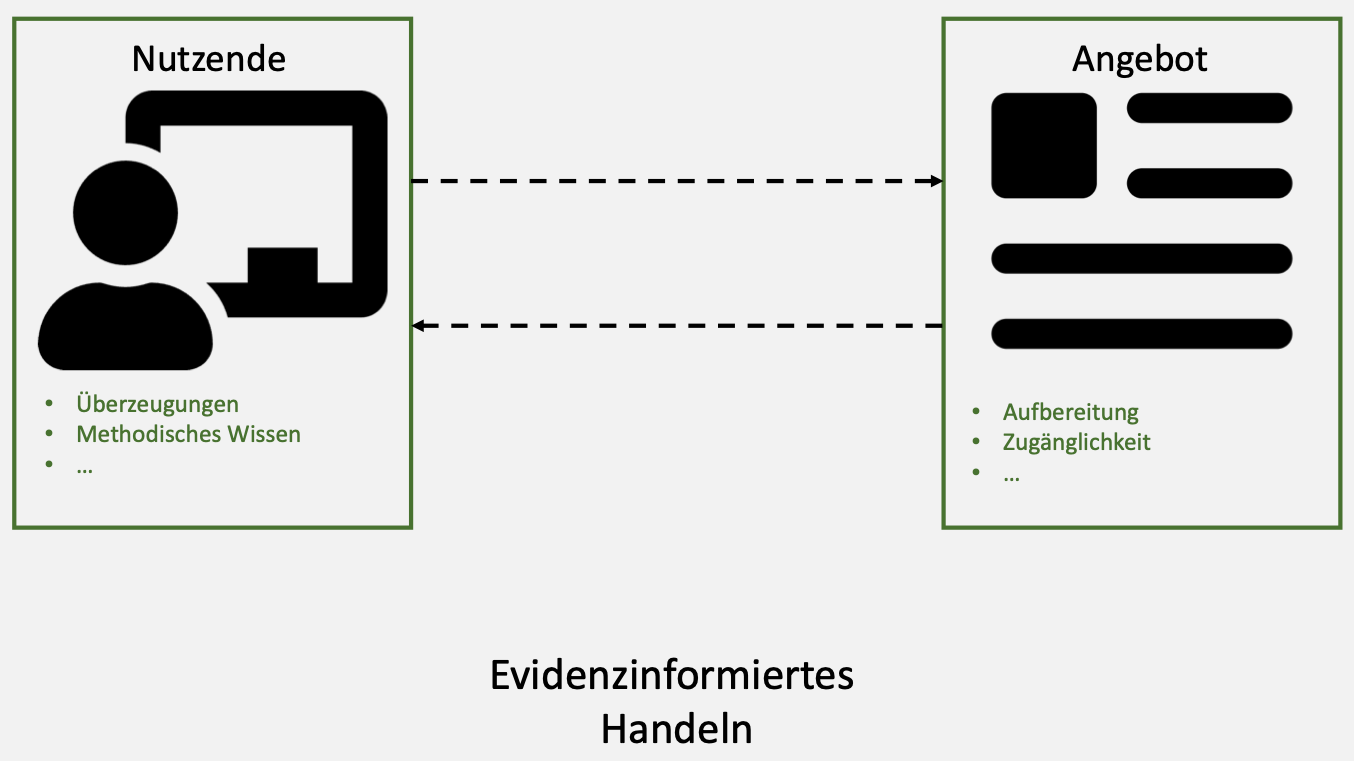
Studie 1: Confirmation Bias vs.
Belief Updating (Nutzendenseite)
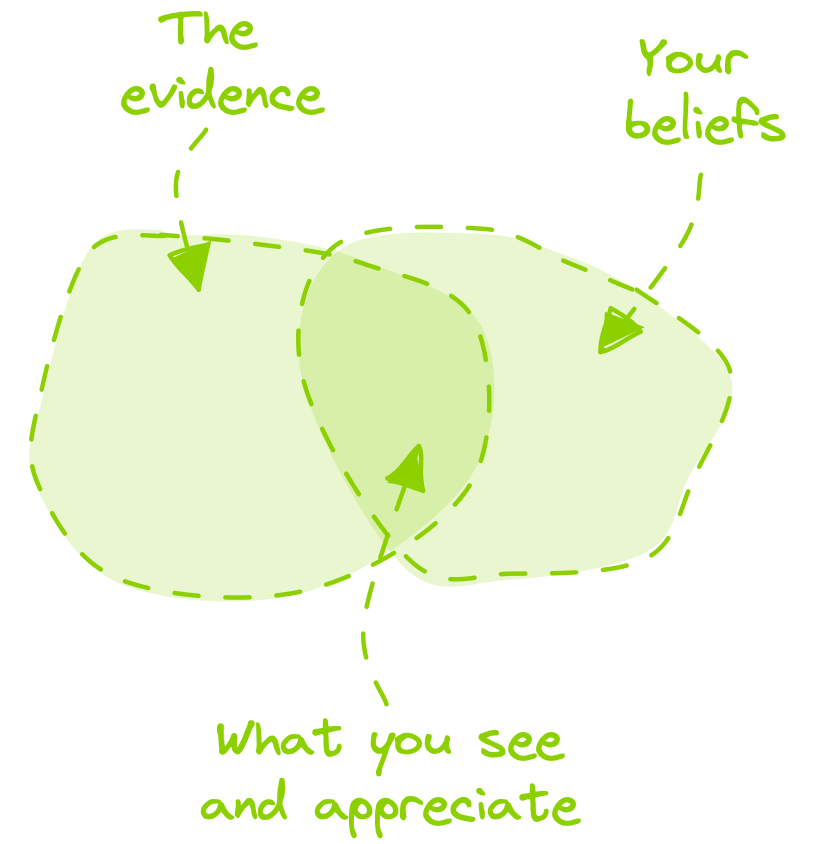
gemeinsam mit Samuel Merk
Design, Materialien und Variablen
Between-person Design mit dem 2-stufigen Experimentalfaktor (In)kongruenz zwischen Überzeugung und Evidenz
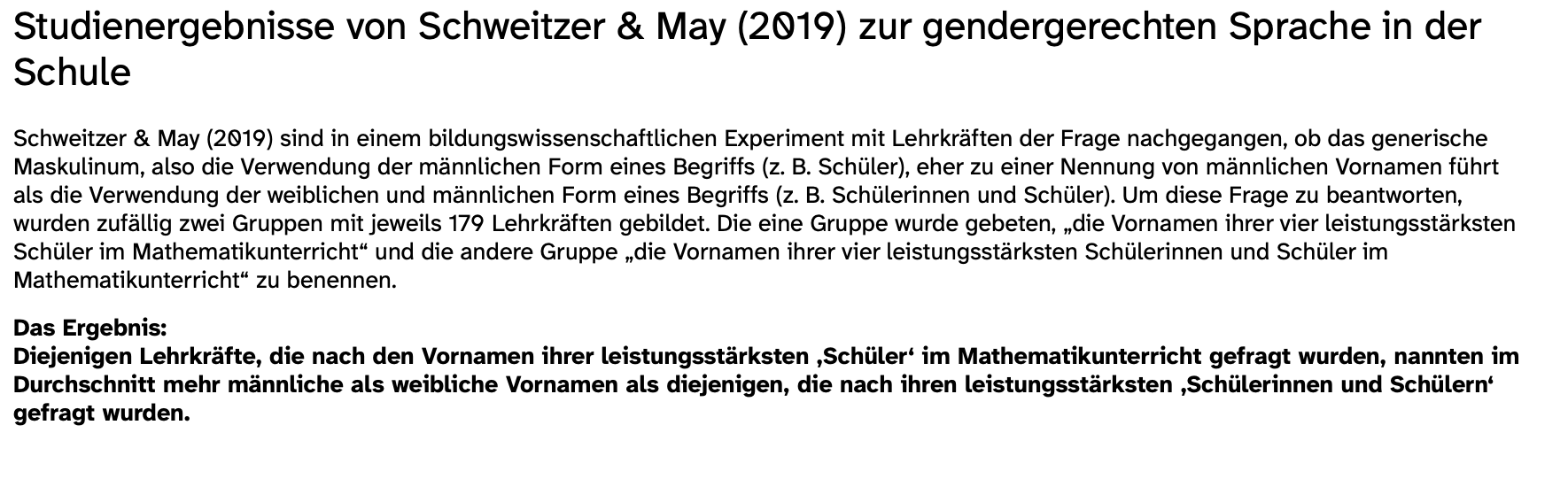
Thema “Gendergerechte Sprache in der Schule”
![]()
Abhängige Variablen
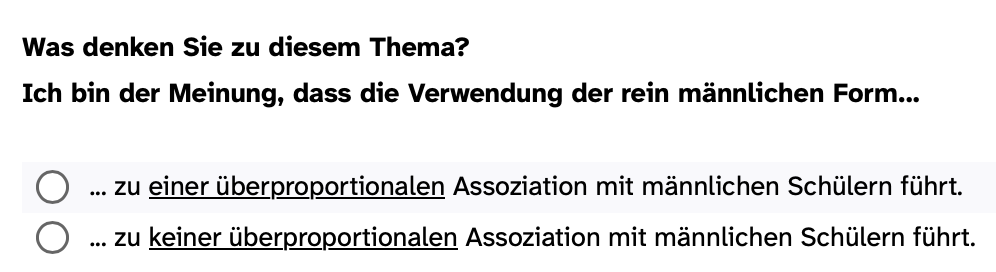
- Überzeugungsrichtung:
![]()
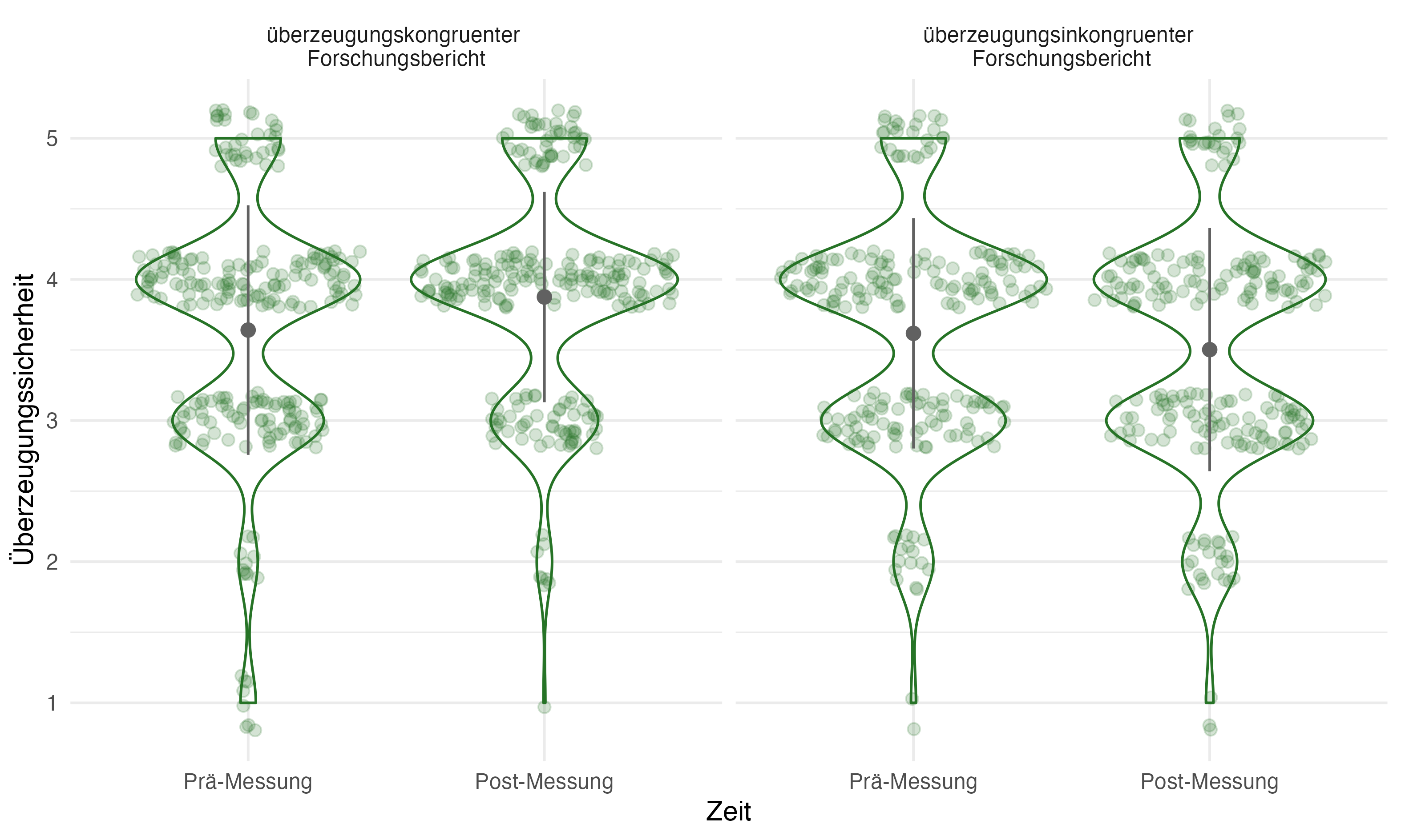
- Überzeugungssicherheit:
![]()
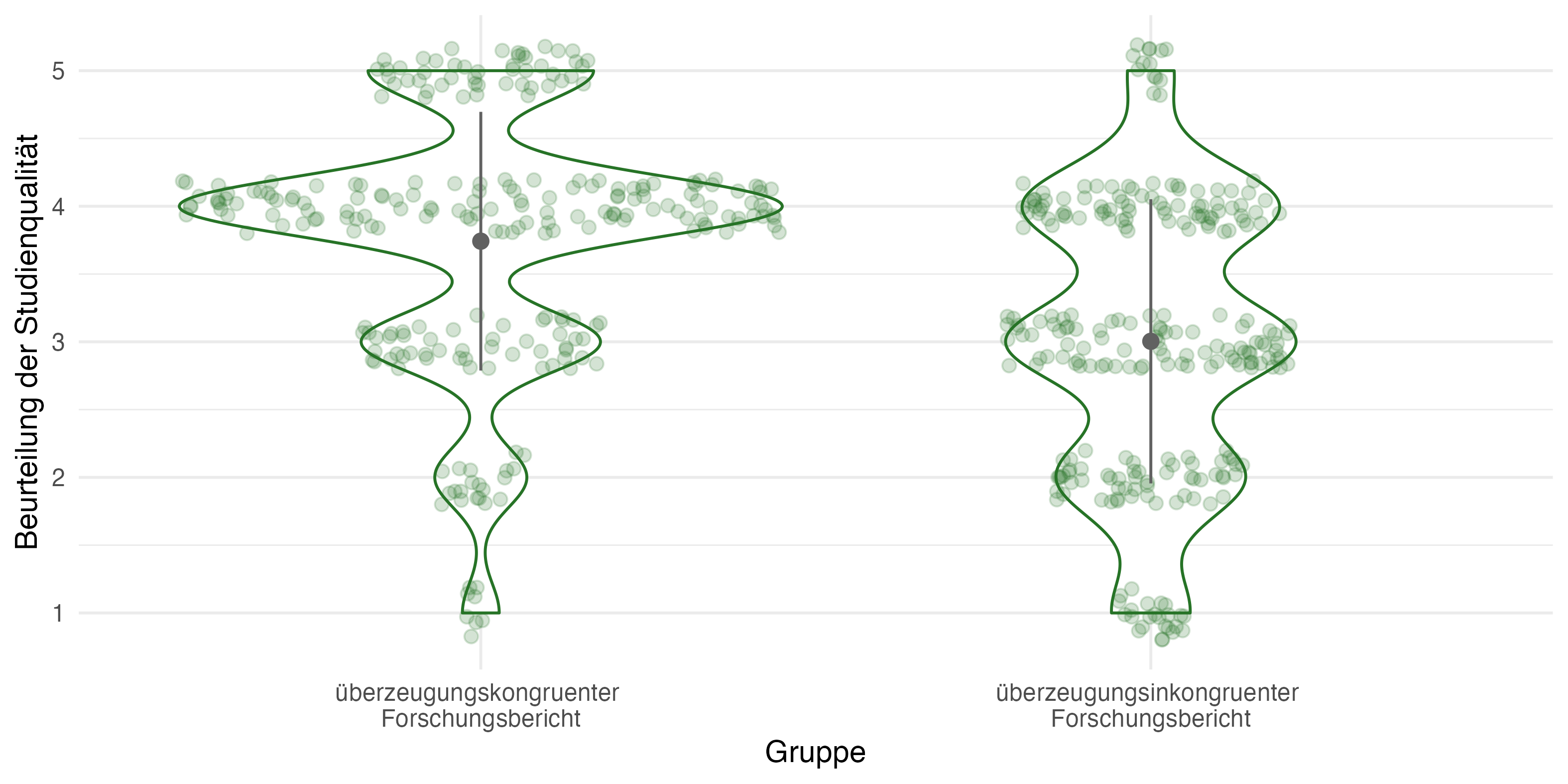
- Beurteilung der Studie:
![]()
- Überzeugungsrichtung:


Ergebnisse: Beurteilung der Studie
Ergebnisse: Updating der Überzeugungsrichtung

Ergebnisse: Updating Überzeugungssicherheit
Studie 2: Practical Significance Bias?
(Angebot von Evidenz)

Kommunikation von Forschungsergebnissen
- Diverse Formate der Wissenschaftskommunikation (Besa, 2024)
- Kaum empirische Forschung zu nutzer:innenfreundliche Gestaltung von Wissenschaftskommunikation (z.B. Fitzgerald & Tipton, 2022; Lortie-Forgues et al., 2021; Merk et al., 2023)
- Diverse Darstellungsweisen der Forschungsergebnisse:
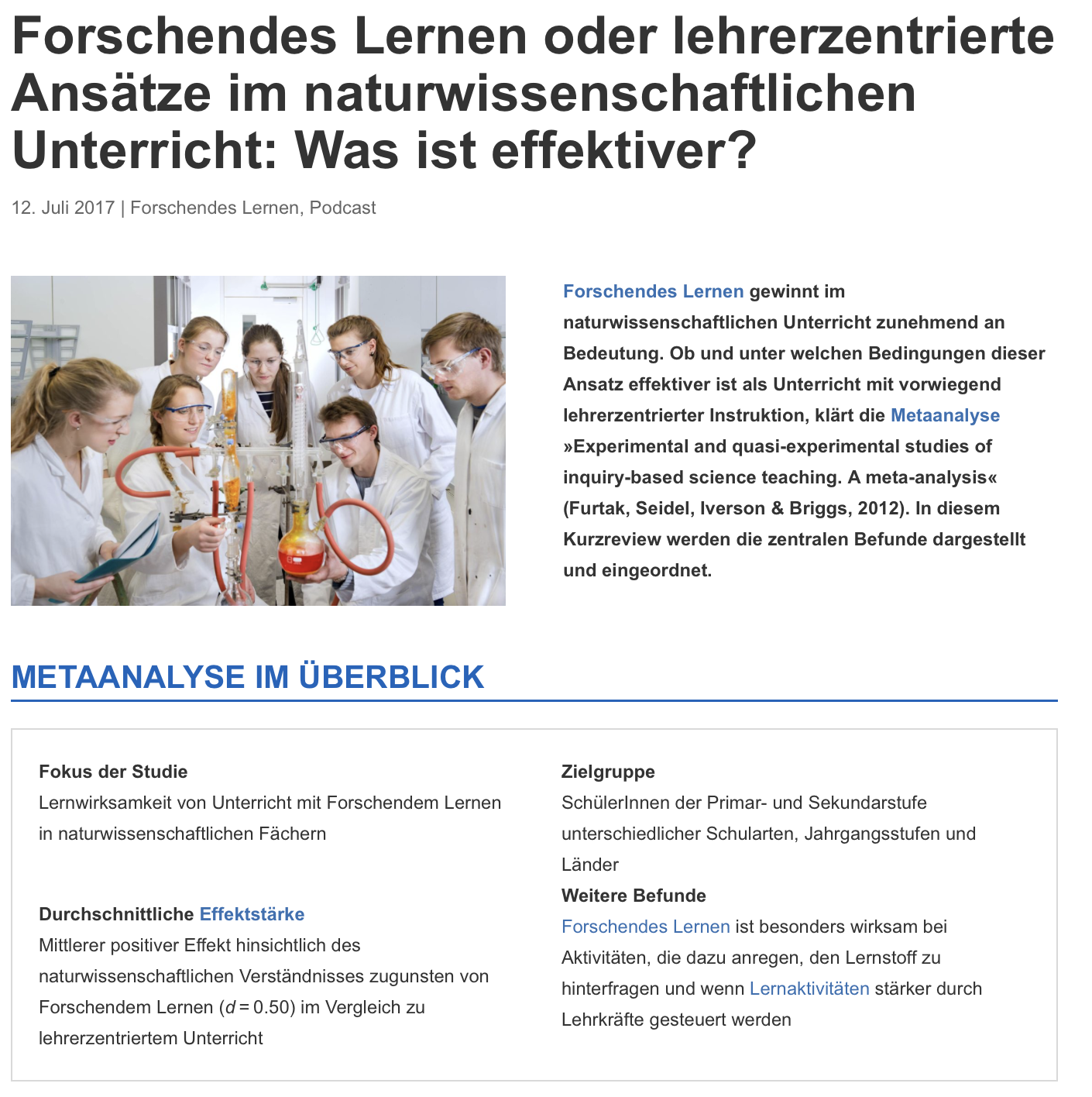 (Knogler et al., 2017) (Knogler et al., 2017) |
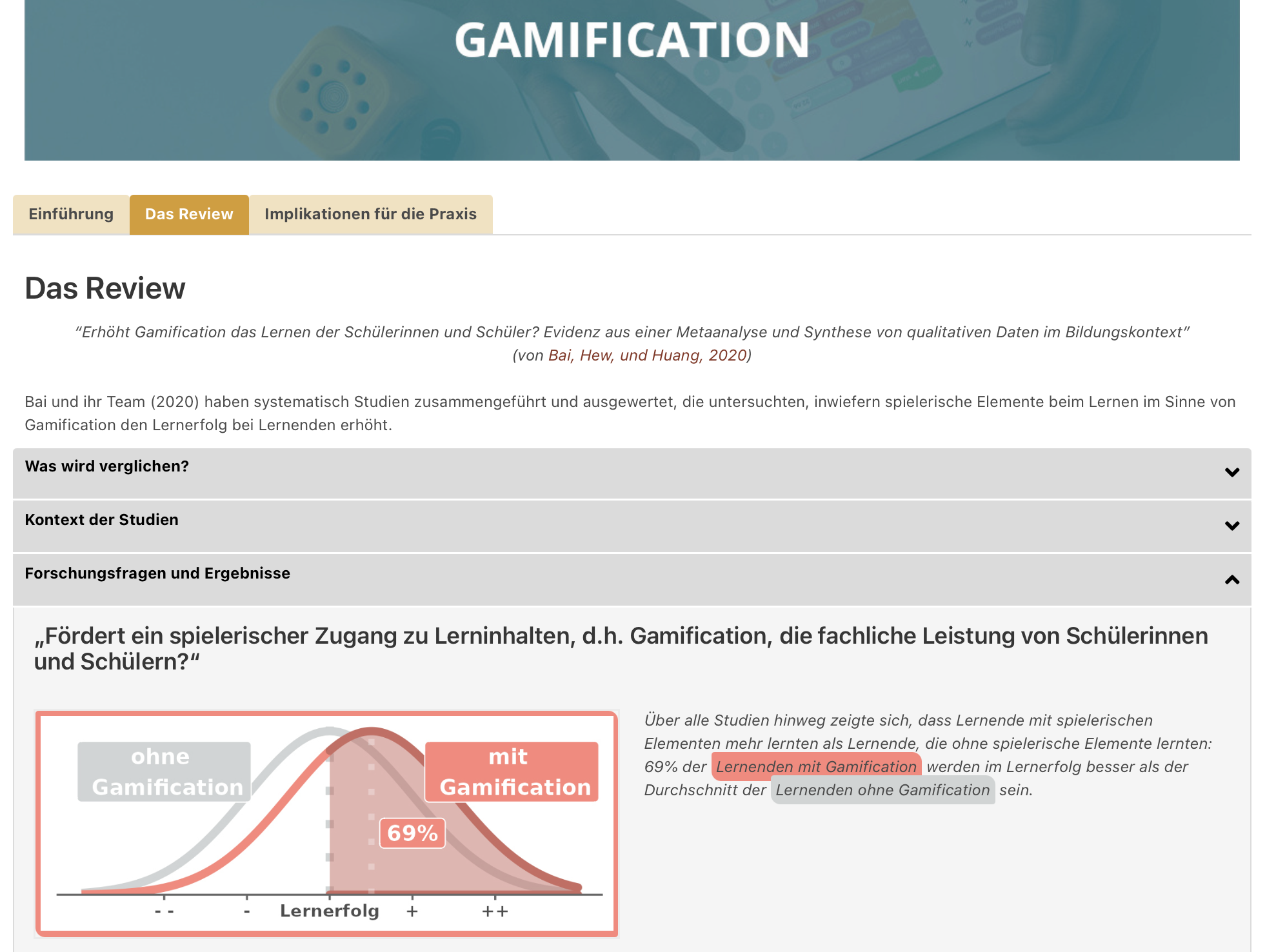 (Backfisch et al., 2021) (Backfisch et al., 2021) |
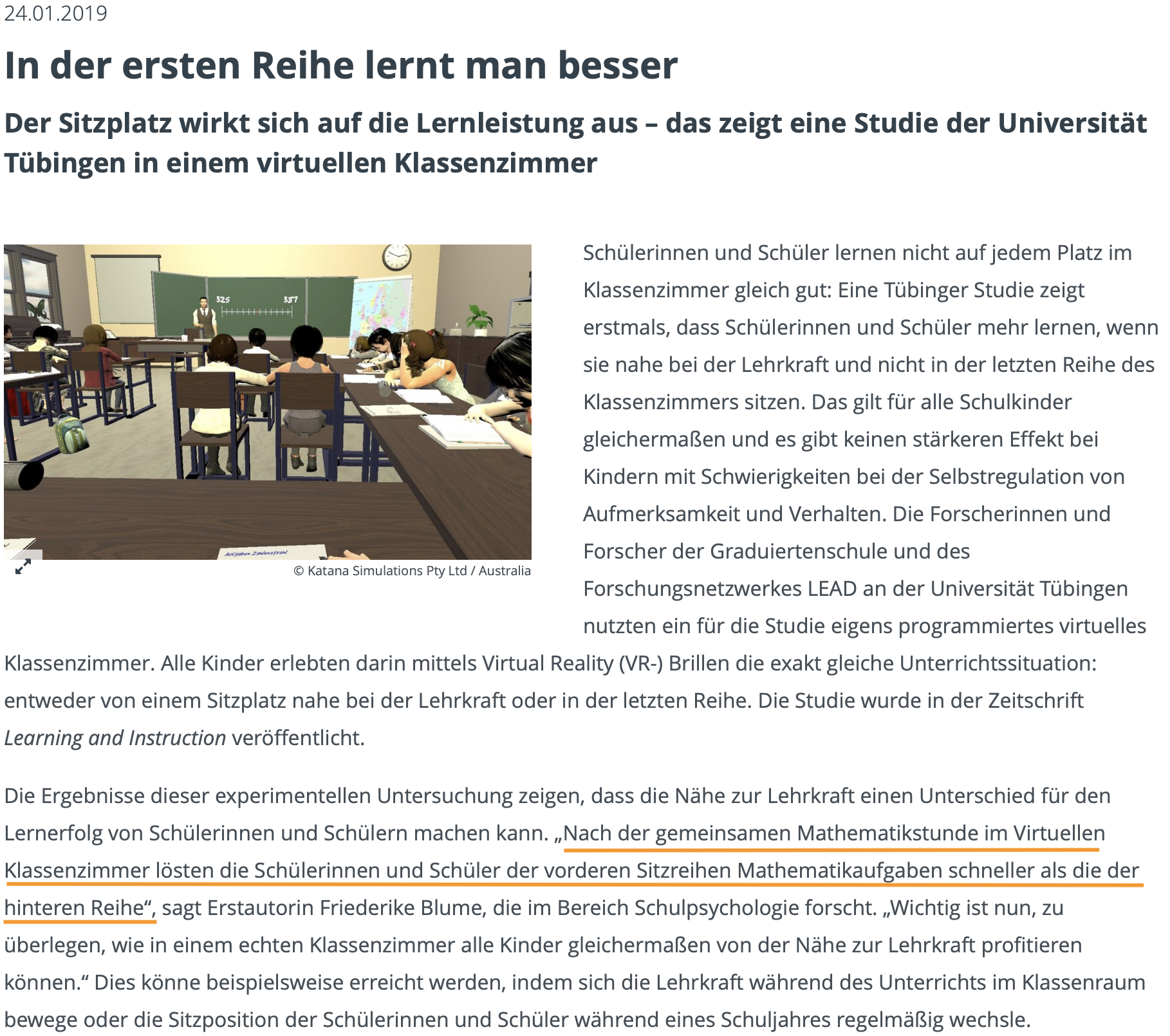 (Rijkhoek, 2019) (Rijkhoek, 2019) |
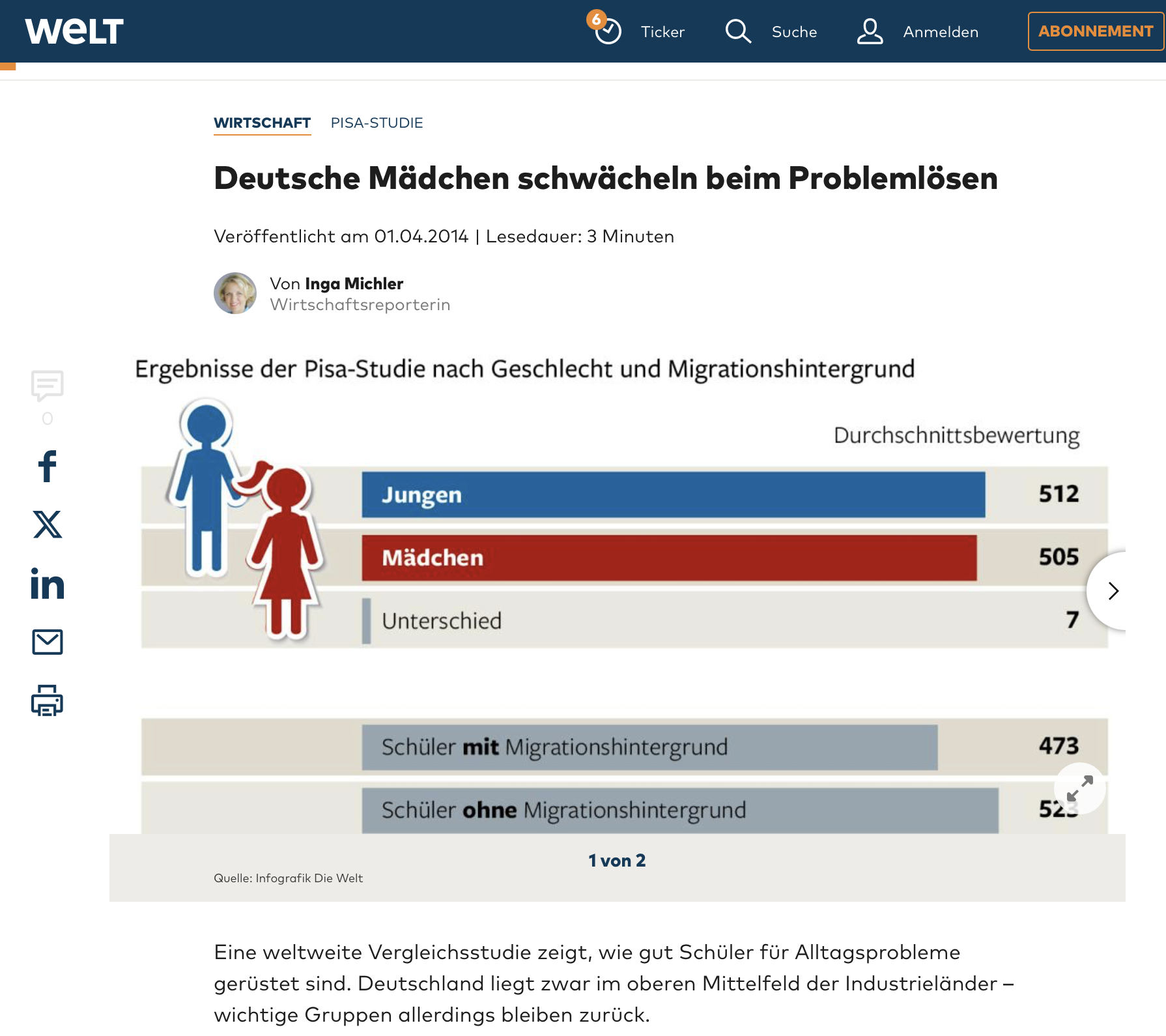 (Michler, 2014) (Michler, 2014) |
- Verschiedene textliche und visuelle Darstellungen von Effektstärken beeinflussen die Wahrnehmung und Einschätzung von Effektstärken durch (angehende) Lehrpersonen (z.B. Schmidt et al., 2023; Kühlwein et al., 2025; Merk et al., 2023; Schneider et al., 2024)
- Wenn in Forschungsberichten Informationen über Effektstärken fehlen, assoziieren wissenschaftliche Laien automatisch große Effekte (Practical Significance Bias) (Michal & Shah, 2024)
Design, Materialien und Variablen
- Between-person Experiment mit fünf Experimentalbedingungen (1 = Effektstärke wird nicht präsentiert; 2 = kleine Effektstärke als Text; 3 = große Effektstärke als Text; 4 = kleine Effektstärke als BESD; 5 = große Effektstärke als BESD)


- Abhängige Variablen:
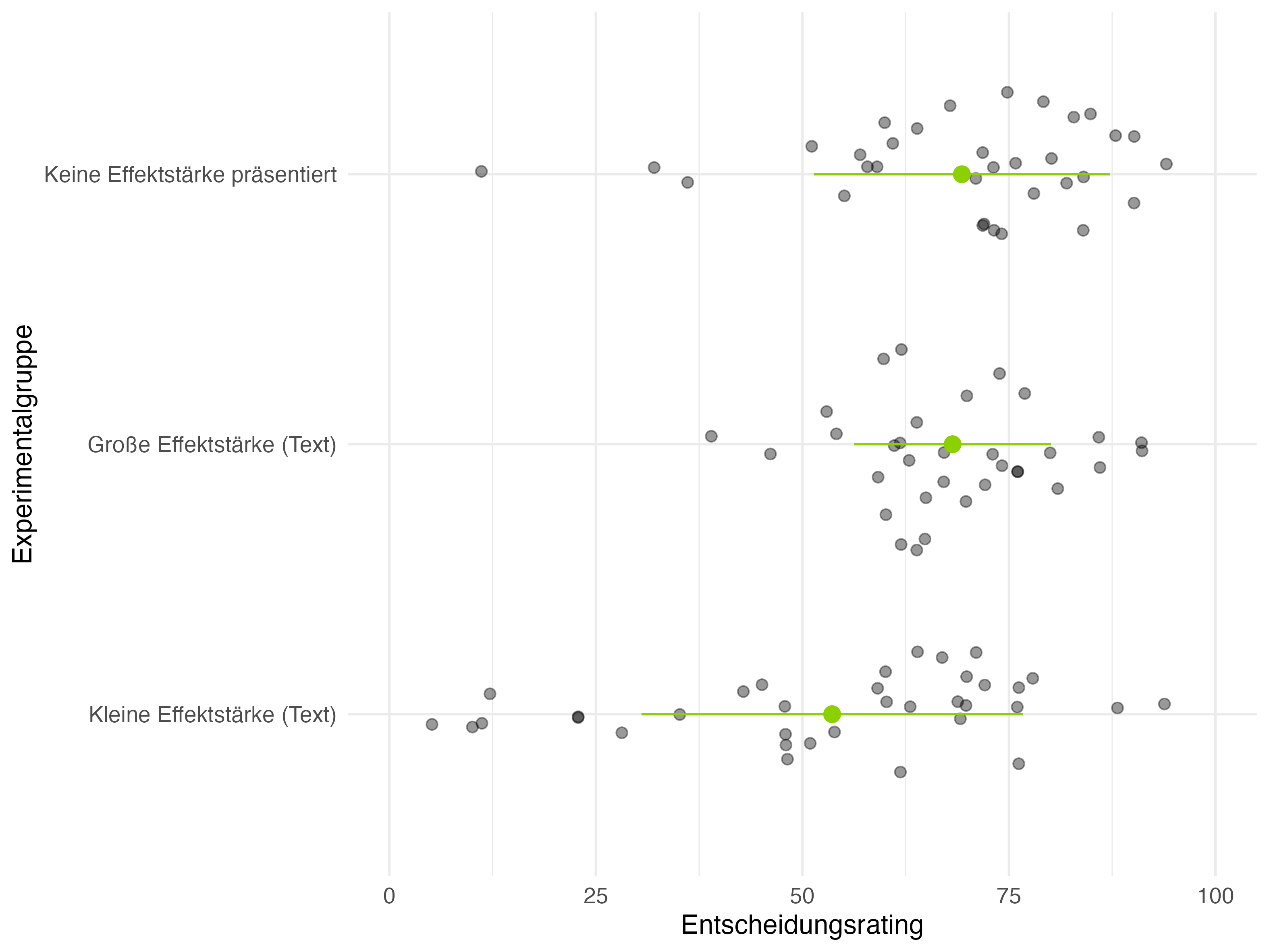
- Entscheidungsrating:
![]()
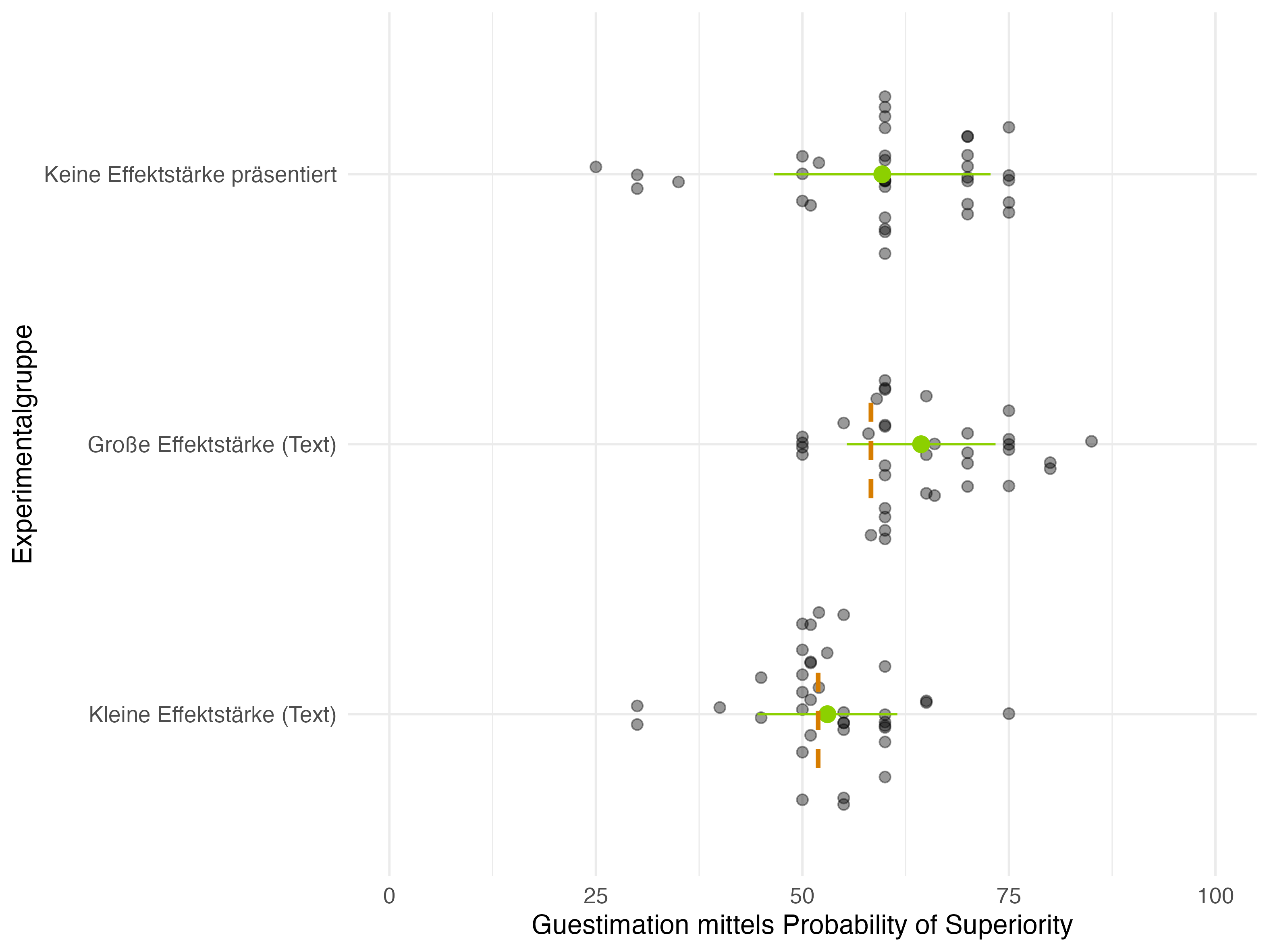
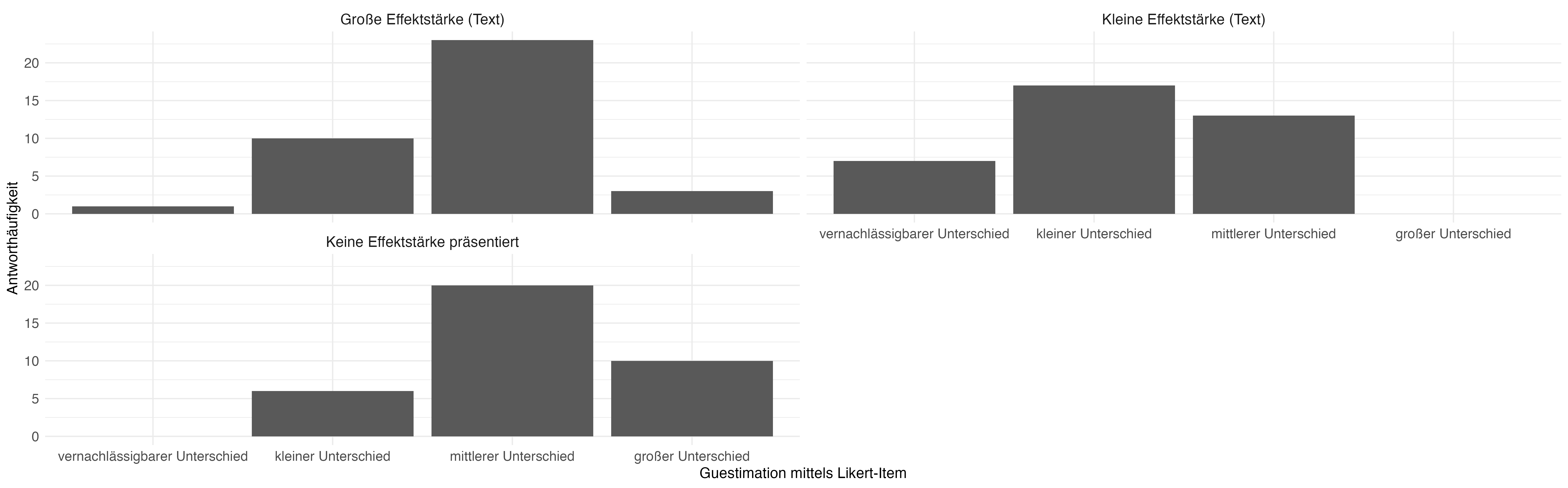
- Guestimation der Effektstärke:
- Entscheidungsrating:
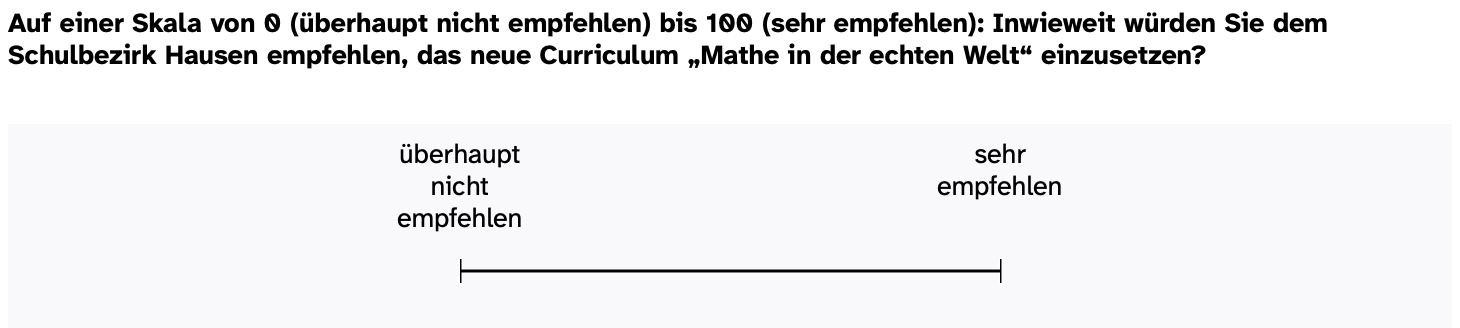
Probability of Superiority 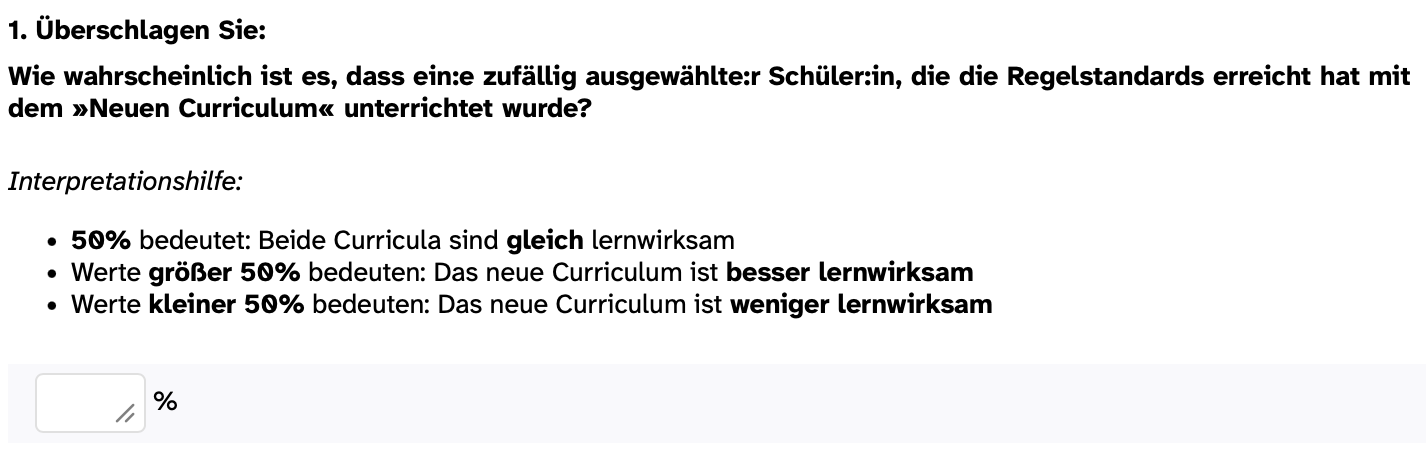 |
Likert-Item 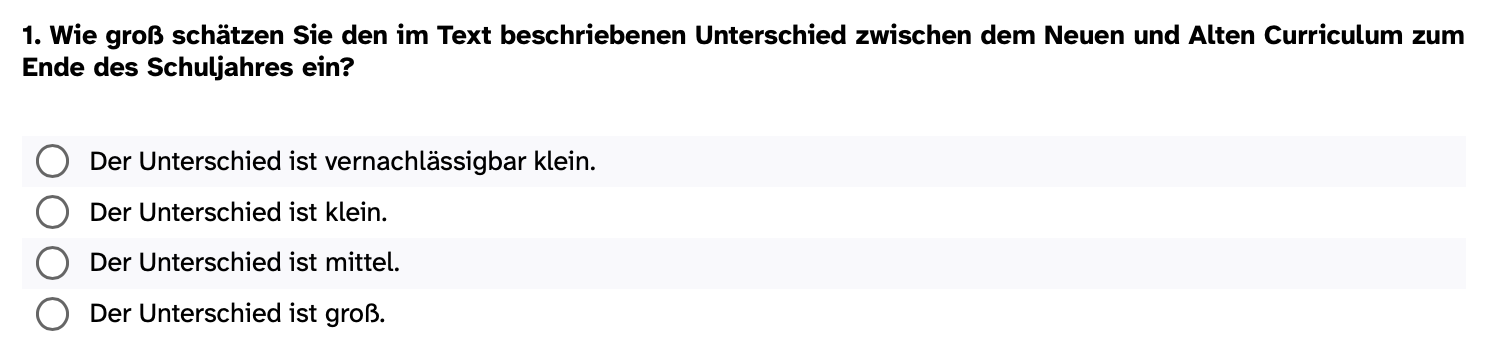 |
Ergebnisse: Entscheidungsrating
Ergebnisse: Guestimation I
Ergebnisse: Guestimation II
Ausblick: Weitere Befunde zur Effektstärkenkommunikation
- Lehrpersonen differenzieren zwischen kleinen und großen Effektstärken (Kühlwein et al., 2025; Merk et al., 2023)
- Mit geeigneten Visualisierungen schätzen Lehrpersonen Effektgrößen erstaunlich akkurat ein (Darstellung von Streuung (Merk et al., 2023); Annotationen (Schneider et al., 2024))
- Common Language Effect Size \(\nRightarrow\) Widely Understood Effect Size:
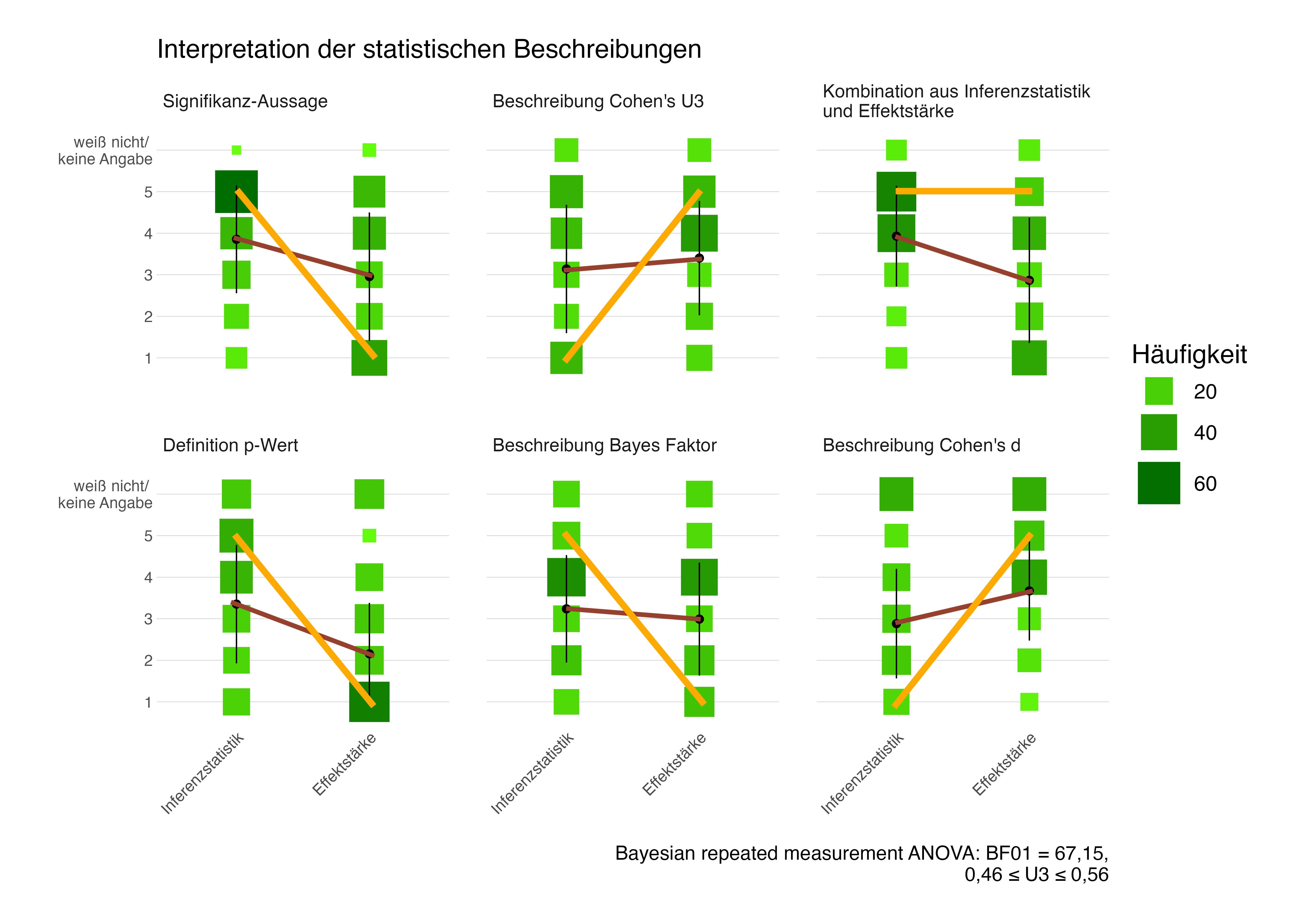
- Lehrpersonen weisen Fehlkonzepte z.B. in der Interpretation von Cohens’ U3 auf (z.B. Kühlwein et al., 2025; Schmidt et al., 2023; Schneider et al., 2024)
- Lehrpersonen haben (teilweise) Schwierigkeiten Informationen über Effektstärken und Inferenzstatistiken voneinander zu trennen (z.B. Schmidt et al., 2023)
![]()
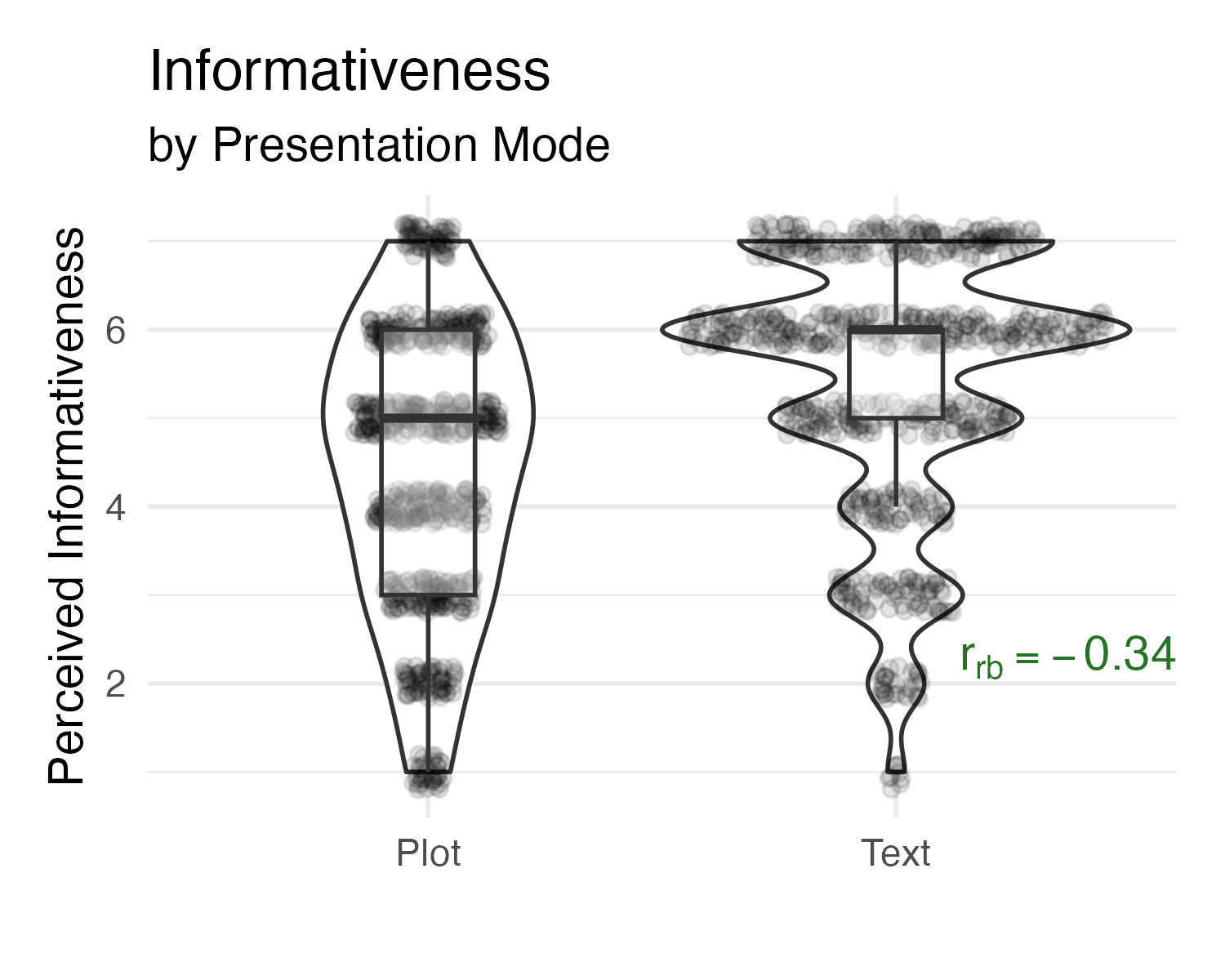
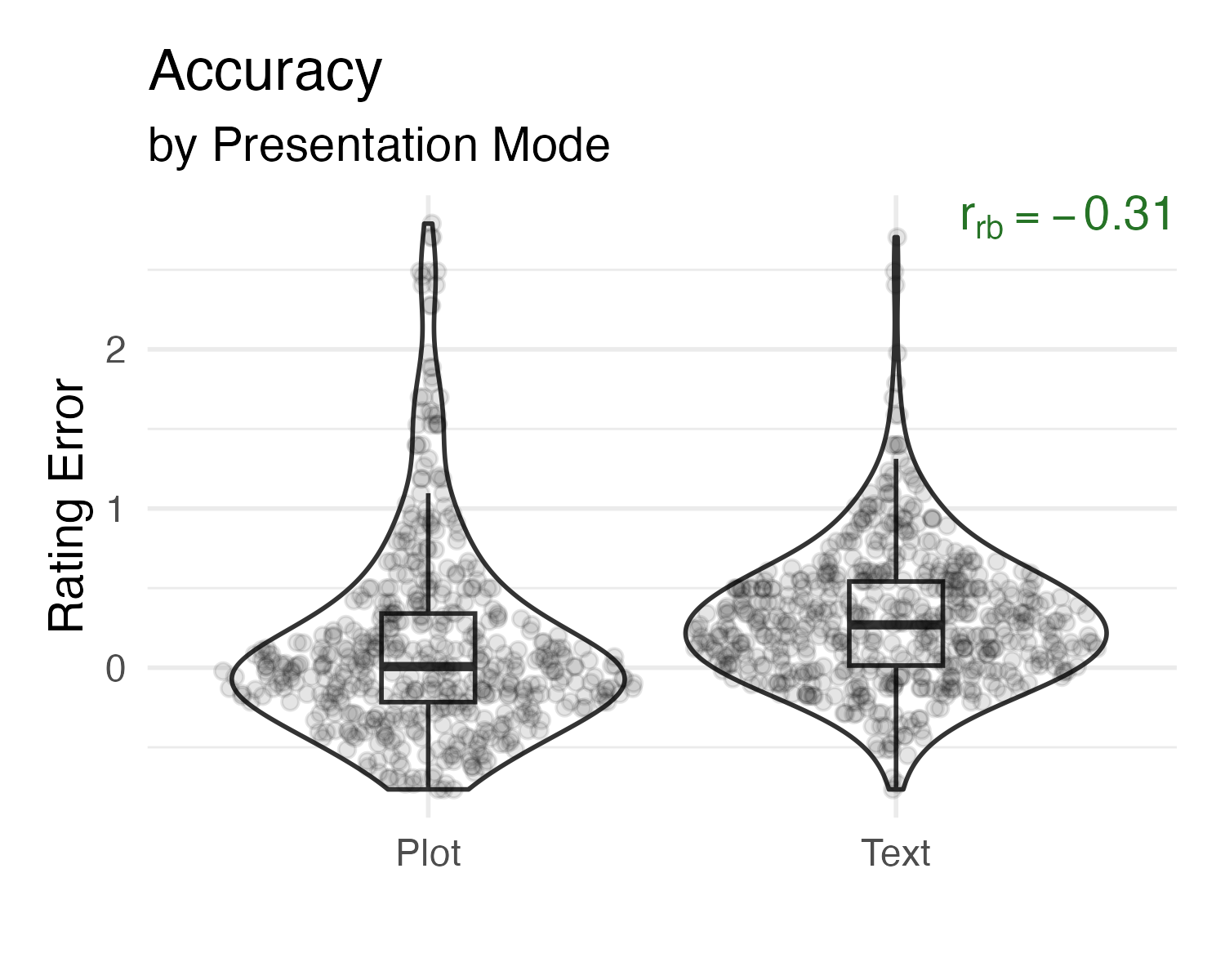
- Text und Bild scheinen komplementäre Vor- und Nachteile zu haben: Lehrpersonen nehmen Cohen’s U3-Formulierungen beispielsweise informativer wahr, schätzen aber visuelle Effektstärkendarstellung (Halfeye-Plots) genauer ein (Kühlwein et al., 2025)
 |
 |
Limitation
Interpretation eine notwendige, aber nicht hinreichende Bedingung für gelingendes evidenzinformiertes Handeln
_adapted_barriers_black.png)
Eigene Adaption des Prozessmodells nach Groß Ophoff et al. (2023)
