Nutzer:innenfreundliche Wissenschafts
-kommunikation
Erprobung eines neuen Ansatzes zur Kommunikation von Forschungsergebnissen
Pädagogische Hochschule Karlsruhe |
Institut für Empirische Bildungsforschung
Evidenzinformierte Schulpraxis
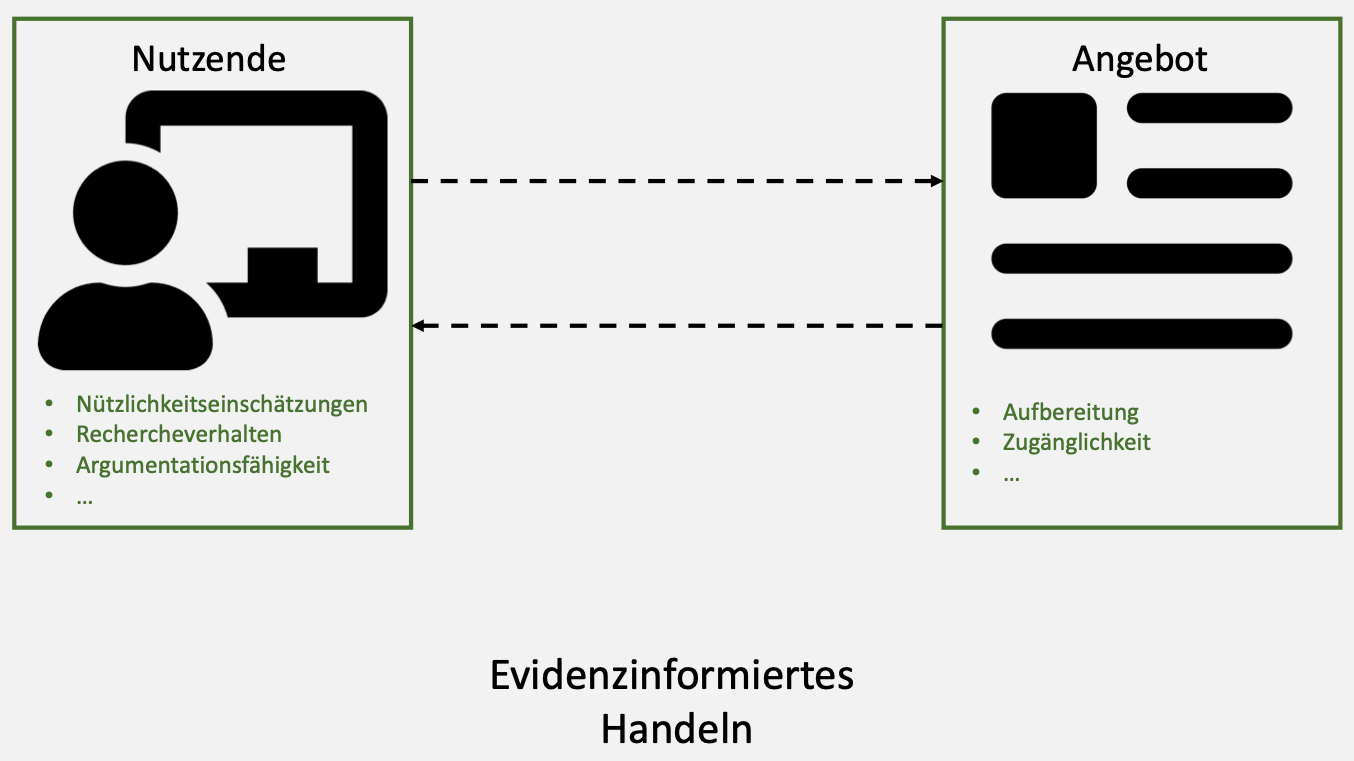
Faktoren, die evidenzinformiertes Handeln fördern oder hemmen, sind divers (vgl. z.B. systematische Reviews von Dagenais et al., 2012; Hemsley-Brown & Sharp, 2003; Schaik et al., 2018; Schmidt, 2024), können aber in Faktoren seitens der Nutzenden oder des Angebots unterteilt werden (Schmidt, 2024)
Wissenschaftskommunikation
- Diverse Formate der Wissenschaftskommunikation (Besa, 2024), aber kaum empirische Forschung zur nutzer:innenfreundlichen Gestaltung von Wissenschaftskommunikation (z.B. Fitzgerald & Tipton, 2022; Lortie-Forgues et al., 2021; Merk et al., 2023)
- Effektexistenz und Effektstärke zentrale Information von Wissenschaftskommunikation, um praktische Schlussfolgerungen ziehen zu können
Wissenschaftskommunikation
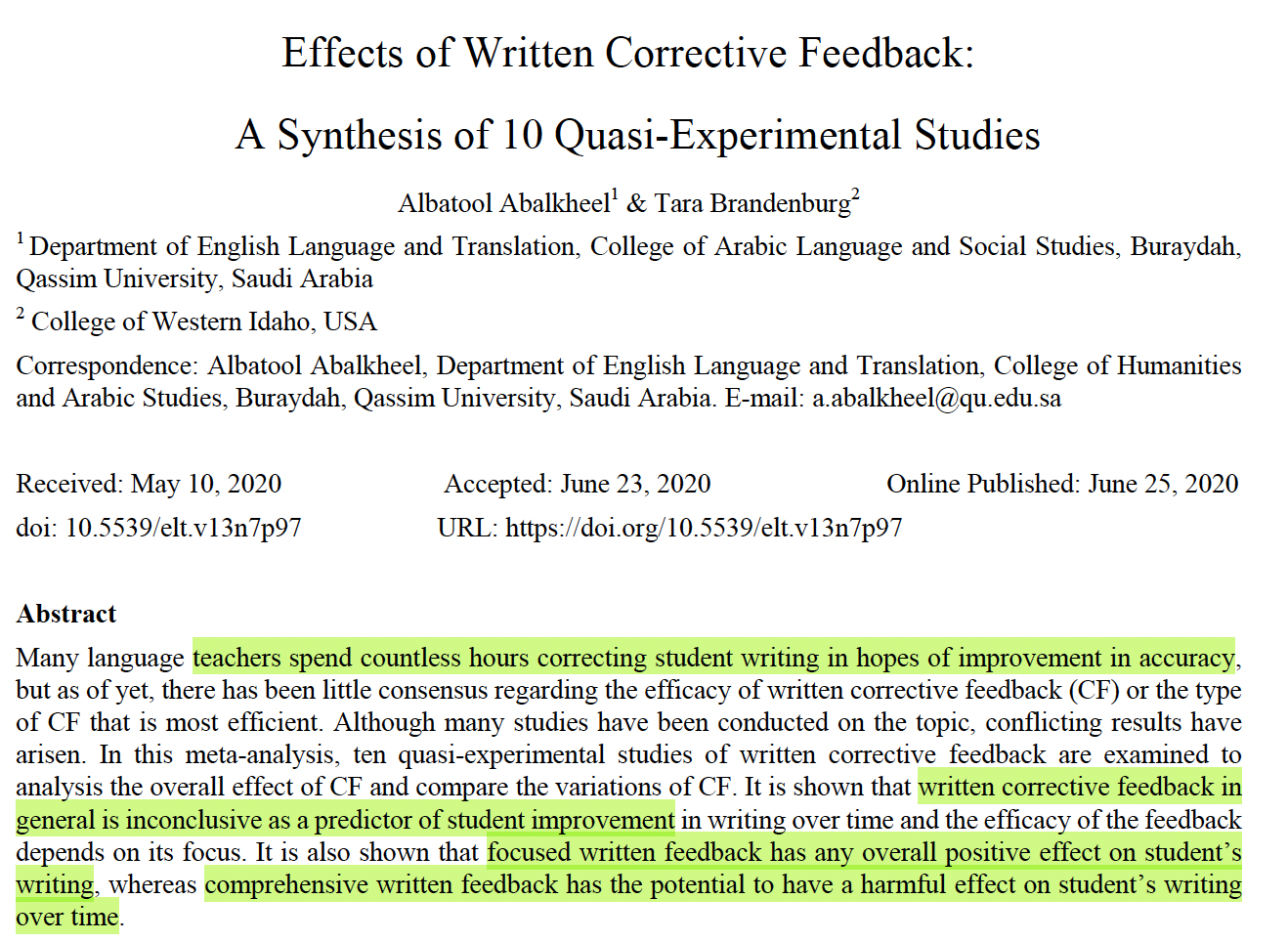
- Wenn in Forschungsberichten Informationen über Effektstärken fehlen, assoziieren wissenschaftliche Laien automatisch große Effekte (Practical Significance Bias, Michal & Shah, 2024)
Unterschiedliche Darstellungen von Effektstärken in Wissenschaftskommunikation vorhanden:
 (Knogler et al., 2017) |
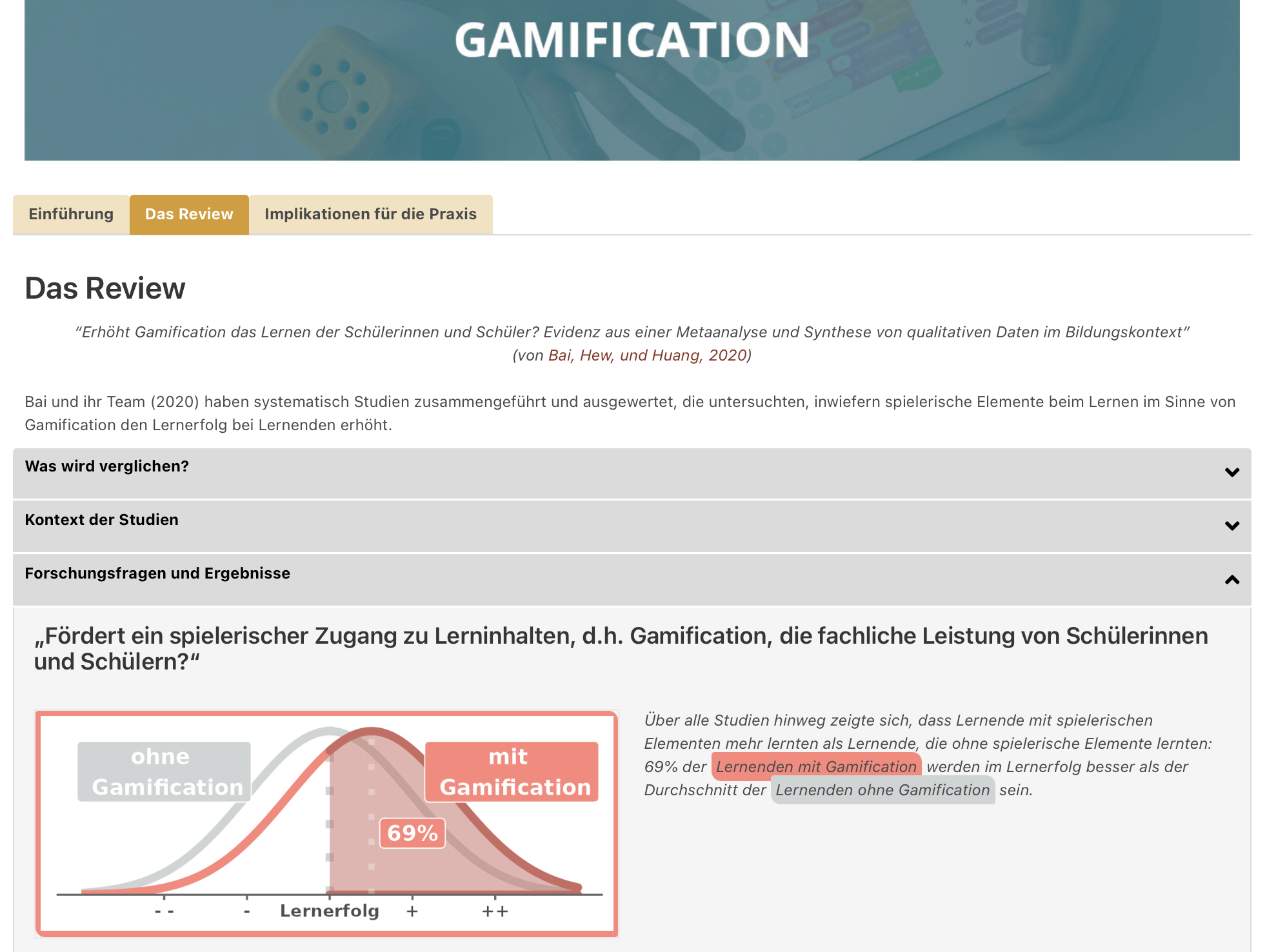 (Backfisch et al., 2021) |
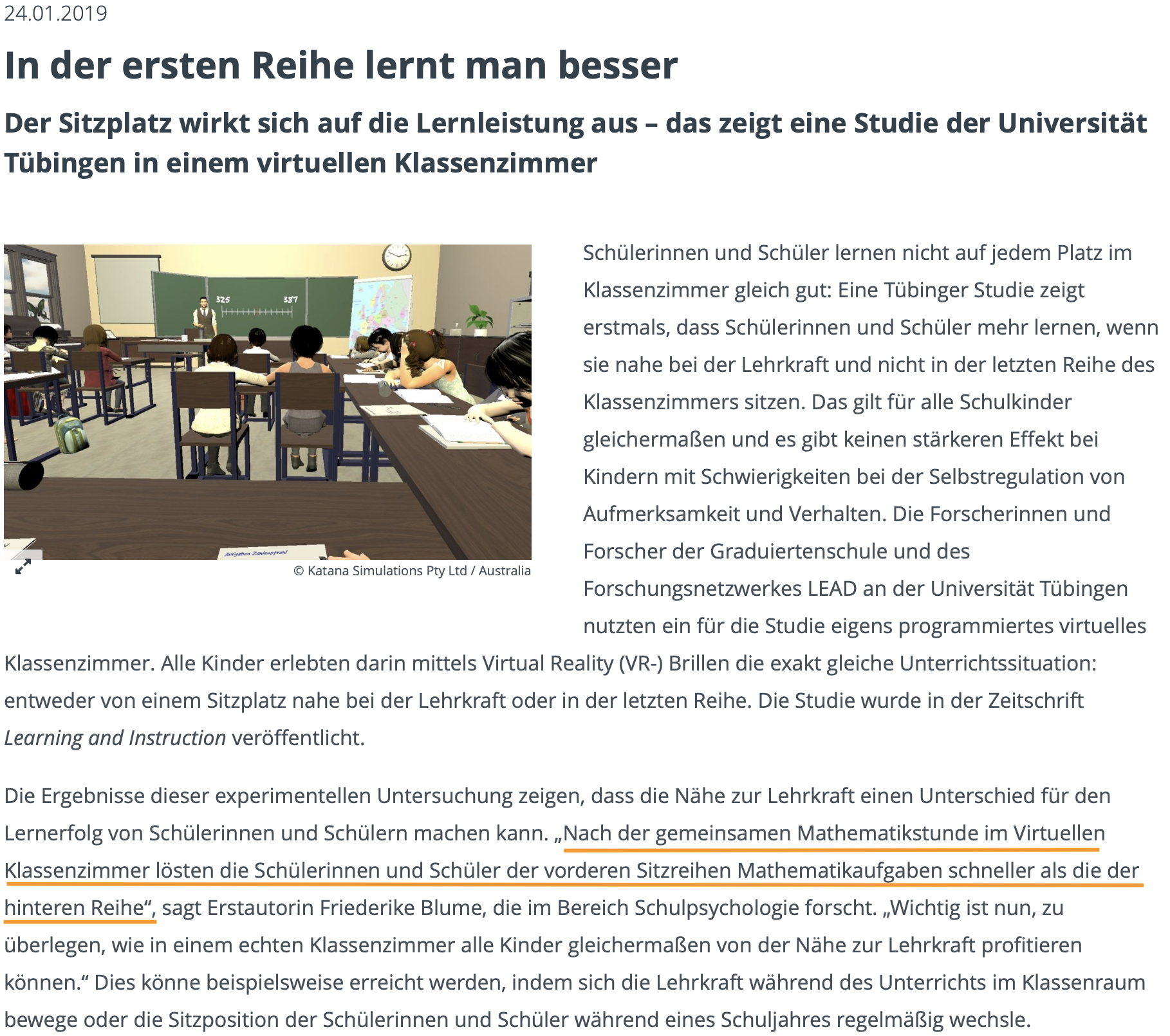 (Rijkhoek, 2019) |
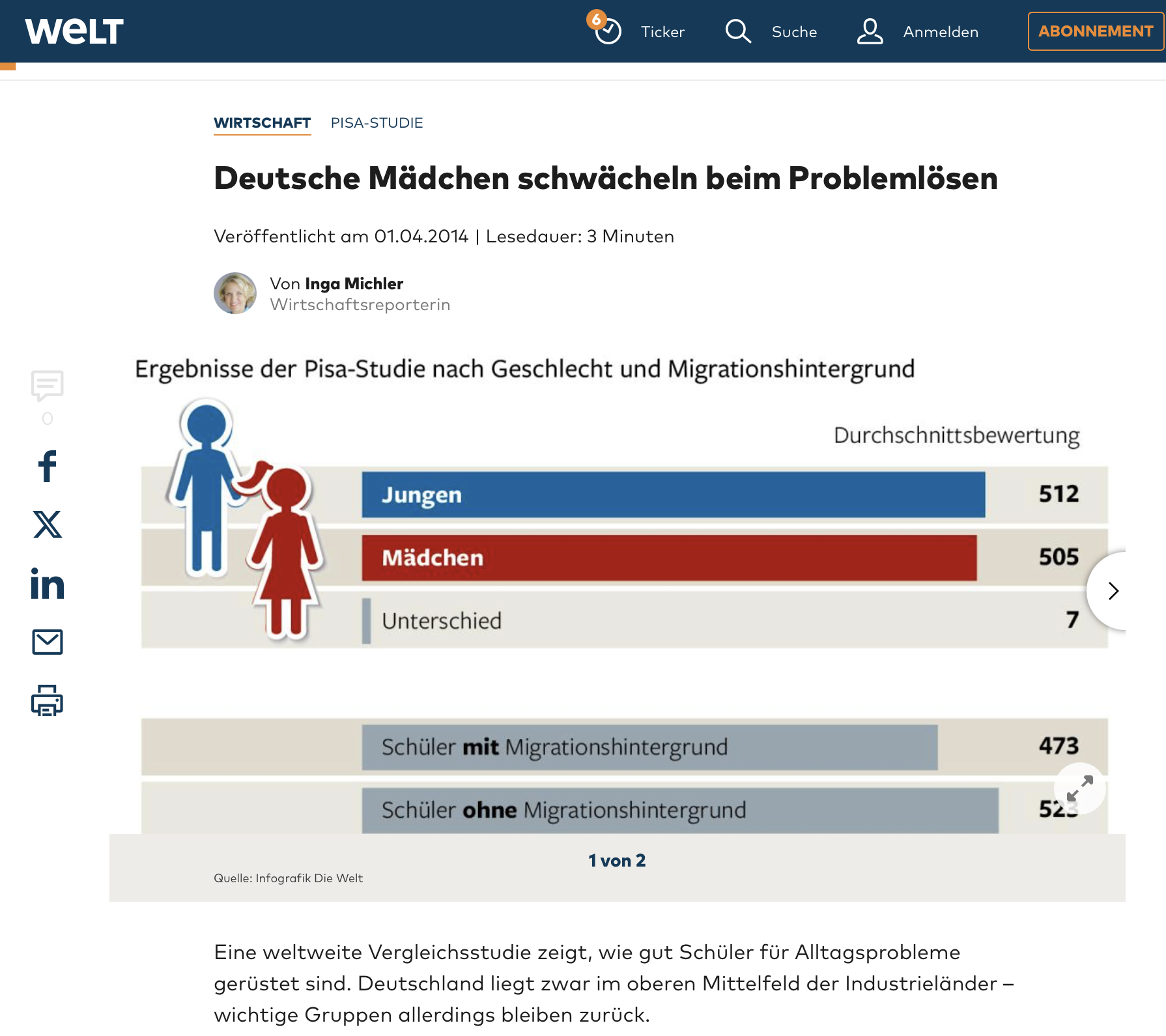 (Michler, 2014) |
- Lehrpersonen können zwischen kleinen und großen Effektstärken differenzieren (Kühlwein et al., 2025; Merk et al., 2023)
- Common Language Effect Size \(\nRightarrow\) Widely Understood Effect Size: Lehrpersonen weisen Fehlkonzepte z.B. in der Interpretation von Cohens’ U3 auf (z.B. Kühlwein et al., 2025; Schmidt et al., 2023; Schneider et al., 2024)
- Mit geeigneten Visualisierungen schätzen Lehrpersonen Effektgrößen erstaunlich akkurat ein (Darstellung von Streuung (Merk et al., 2023); Annotationen (Schneider et al., 2024))
Design, Materialien und Variablen
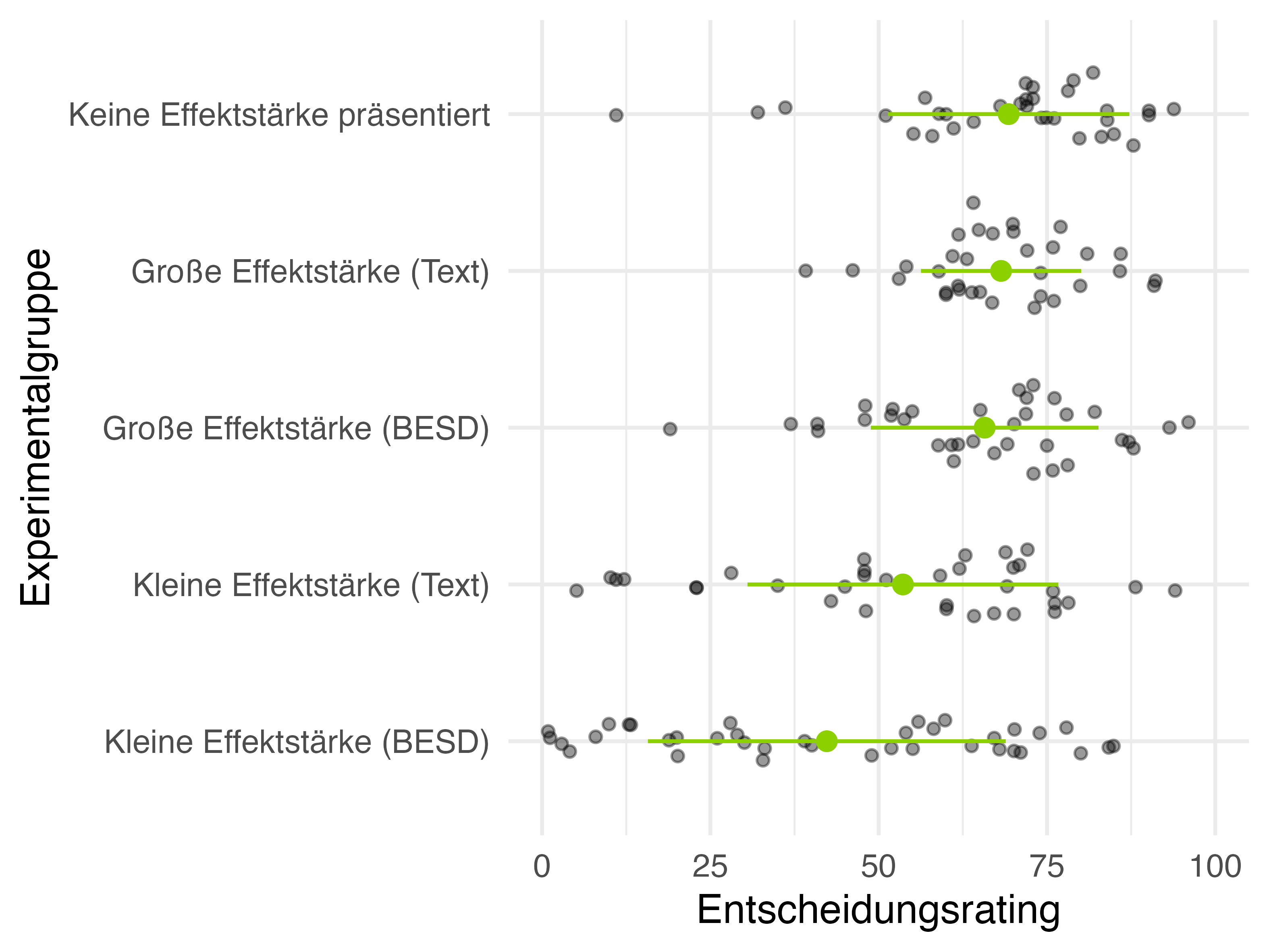
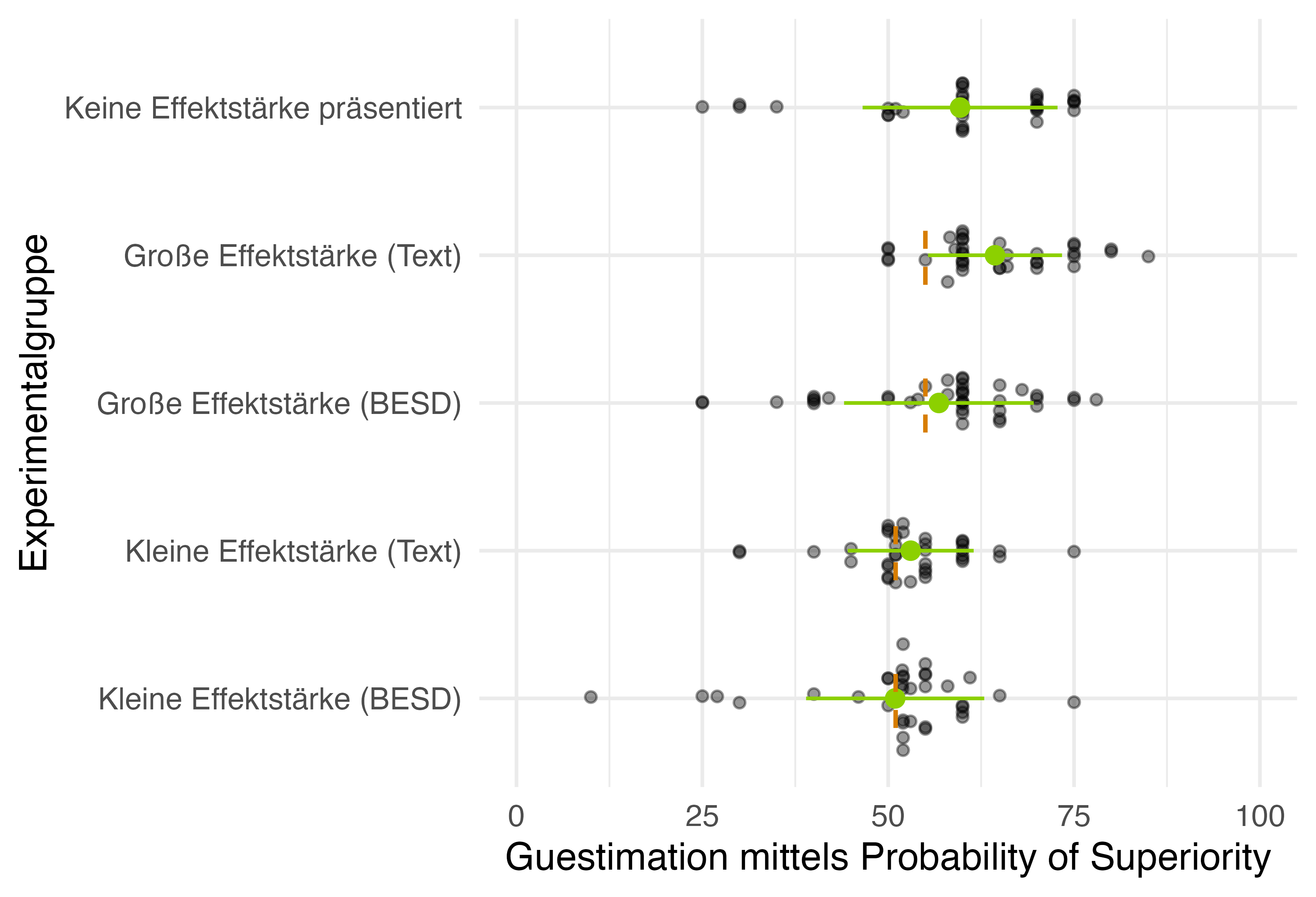
- Between-person Experiment mit fünf Experimentalbedingungen (1 = Effektstärke wird nicht präsentiert; 2 = kleine Effektstärke als Text; 3 = große Effektstärke als Text; 4 = kleine Effektstärke als BESD; 5 = große Effektstärke als BESD)


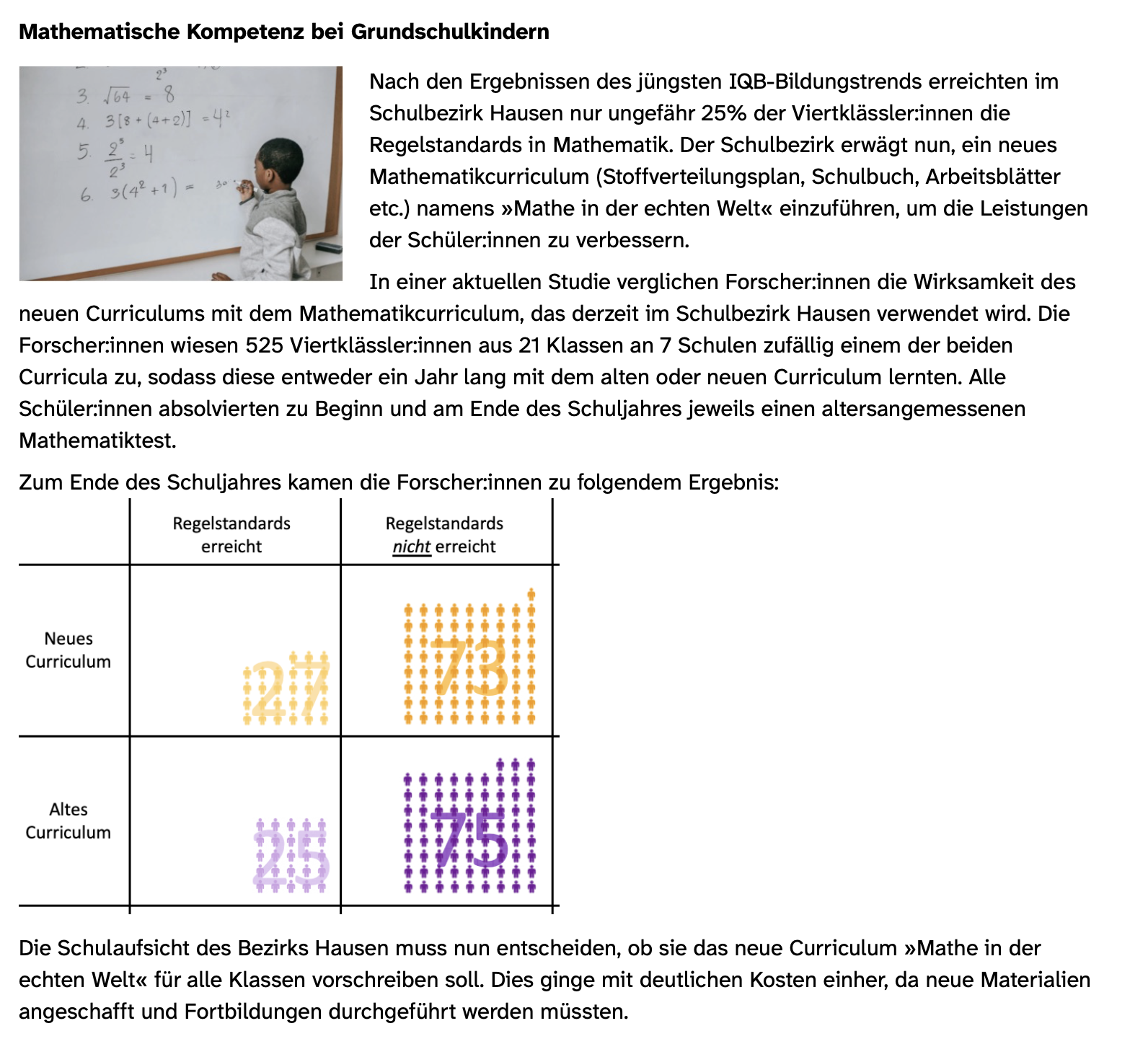
- Abhängige Variablen:
- Entscheidungsrating:
![]()
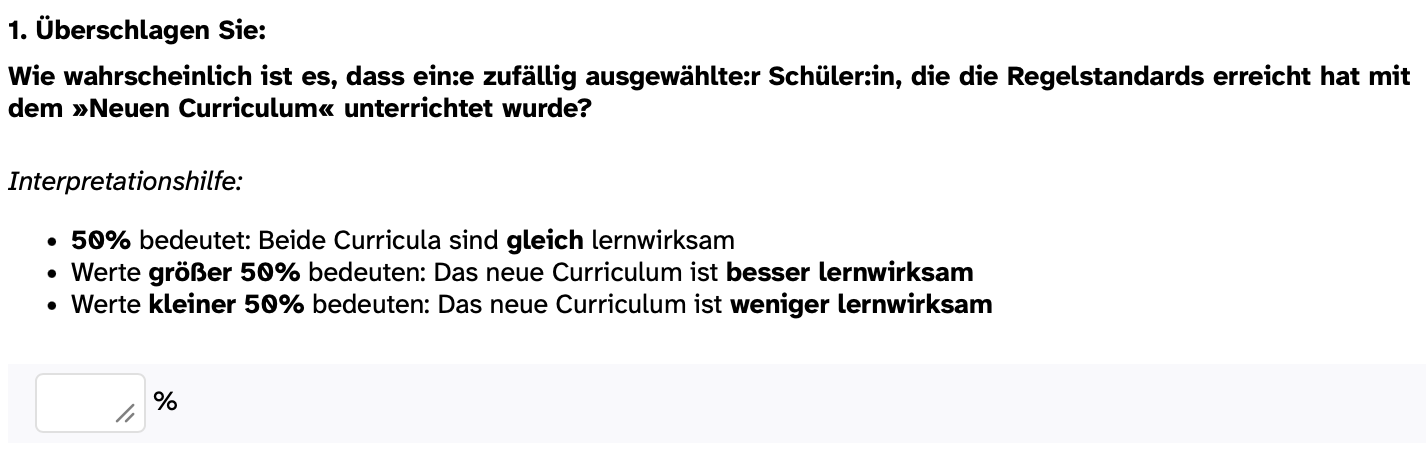
- Guestimation der Effektstärke:
![]()
- Entscheidungsrating:
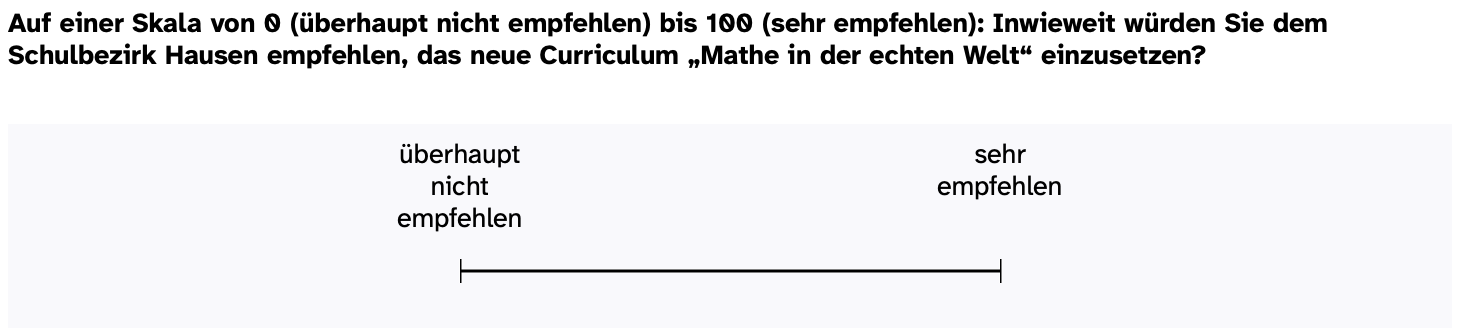
Ergebnisse: Entscheidungsrating
Ergebnisse: Guestimation
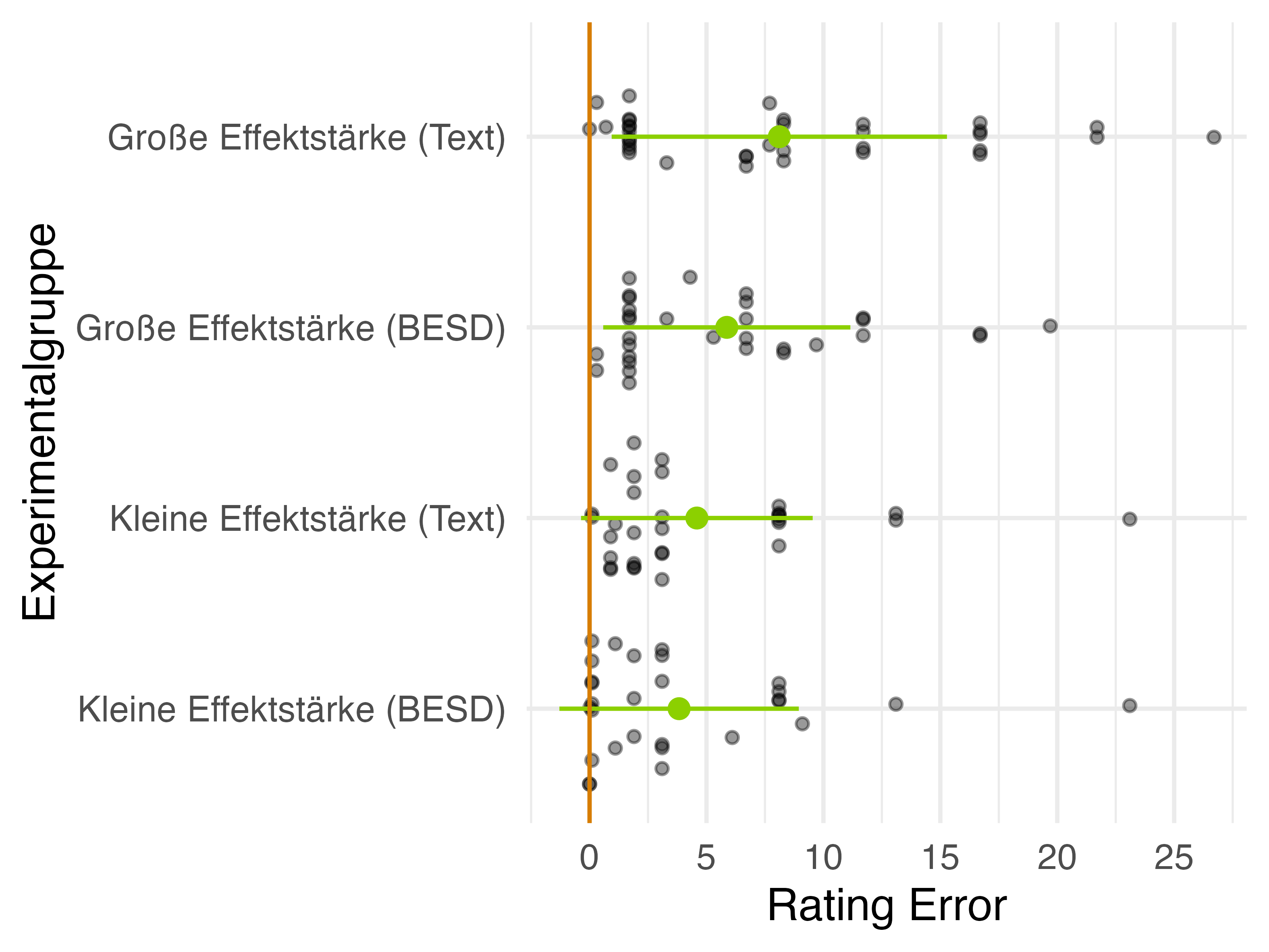
Ergebnisse: Rating Error