
Bildungswissenschaftliche Forschungsergebnisse nutzerfreundlich an Lehrkräfte vermitteln?
Ergebnisse aus experimentellen Studien
Institut für Schul- und Unterrichtsentwicklung
Dienstag, den 5. November, 2024
Forschungsergebnisse aus den Bildungswissenschaften
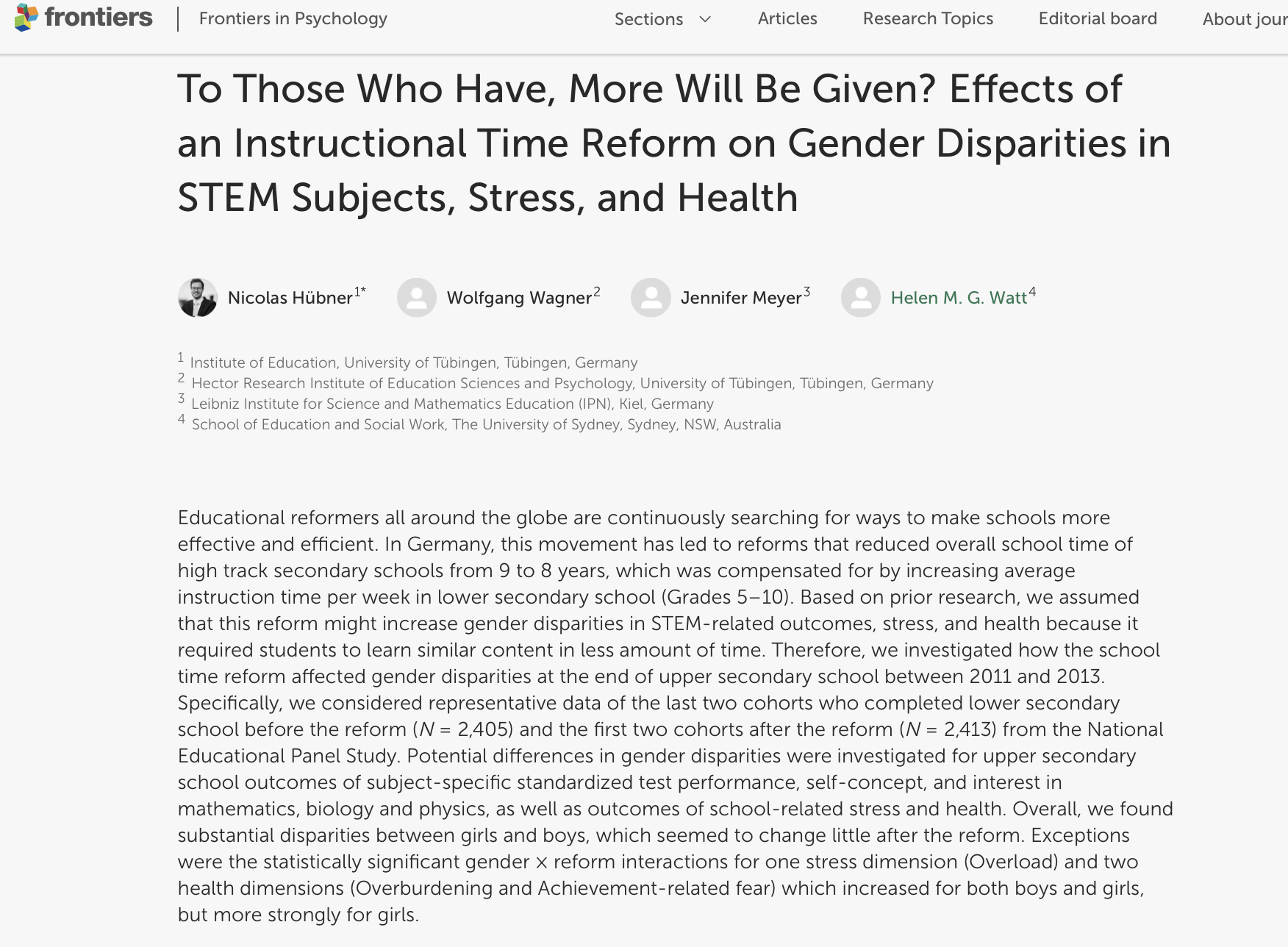


→ Forschungsergebnisse, die politisches Handeln informieren können (Makroebene)
→ Forschungsergebnisse, die Handeln der Lehrpersonen informieren können (Mikroebene)
Evidenzinformierte Schulpraxis
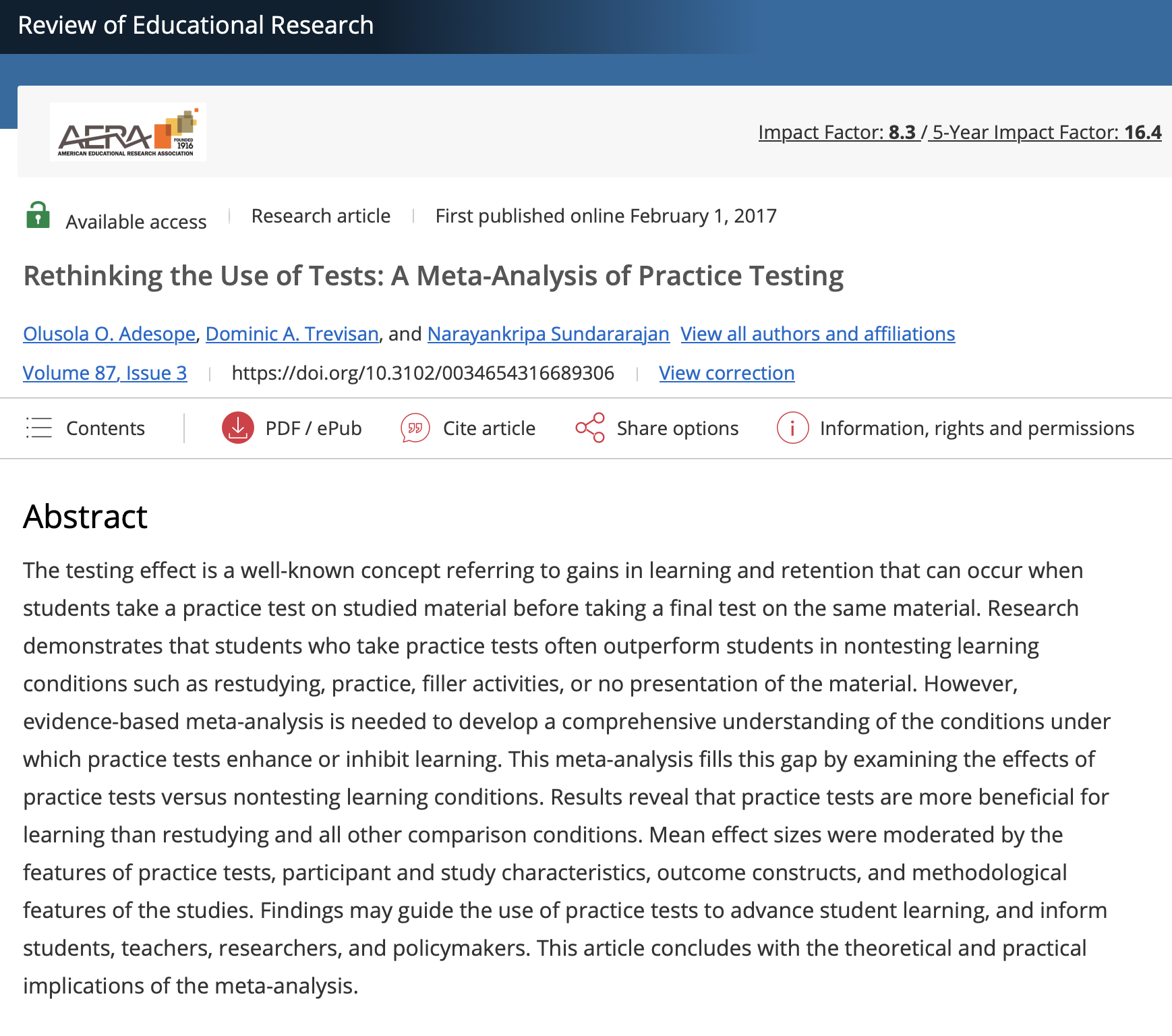
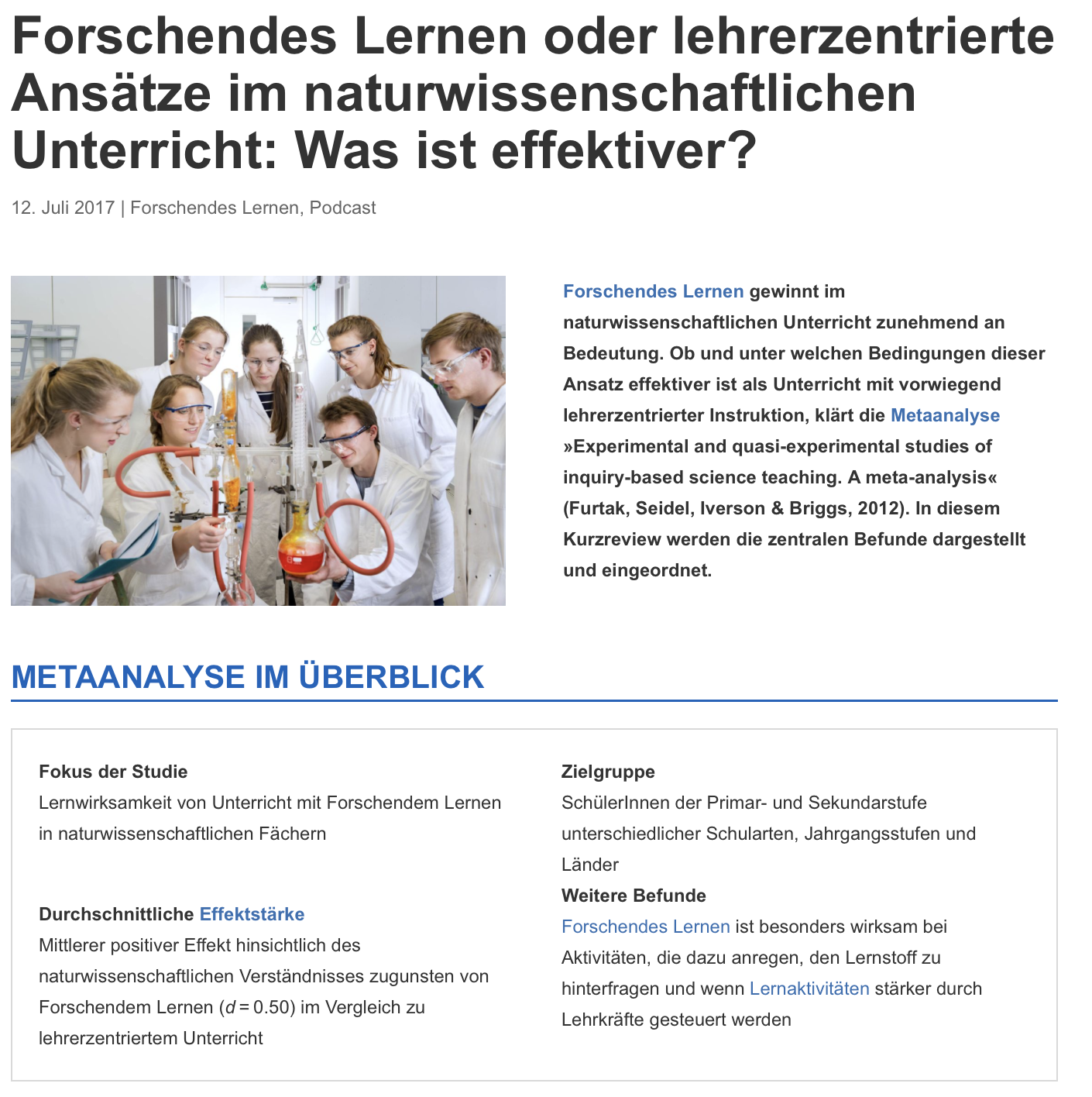
Evidenz = systematisch gewonnene Information (z.B. Bromme et al., 2014; Döring & Bortz, 2016; Shavelson et al., 2021)
(z.B. Bell et al., 2010; Coldwell et al., 2017; Double et al., 2020; Filderman et al., 2018; Kennedy et al., 2017)
Statistische Ergebnisse aufbereiten - aber wie?
Inferenzstatistik
Effektstärken
- Statistische Signifikanz (und p-Wert)
- Bayes Faktor
- Unsicherheitsintervalle
z.B. Standardfehler, Konfidenzintervalle (Zhang et al., 2023) - …
- Standardisierte Effektstärke
z.B. Cohen’s d - Leichter verständliche standardisierte Effektstärken
- Effektstärken in natürlichen Metriken
- …
Präsentationsmodus
- Text
- “Basierend auf den 55 Einzelstudien ergibt die Metaanalyse einen signifikanten positiven Gesamteffekt von Peer Assessment auf die Leistung” (Diery et al., 2021, S. 3)
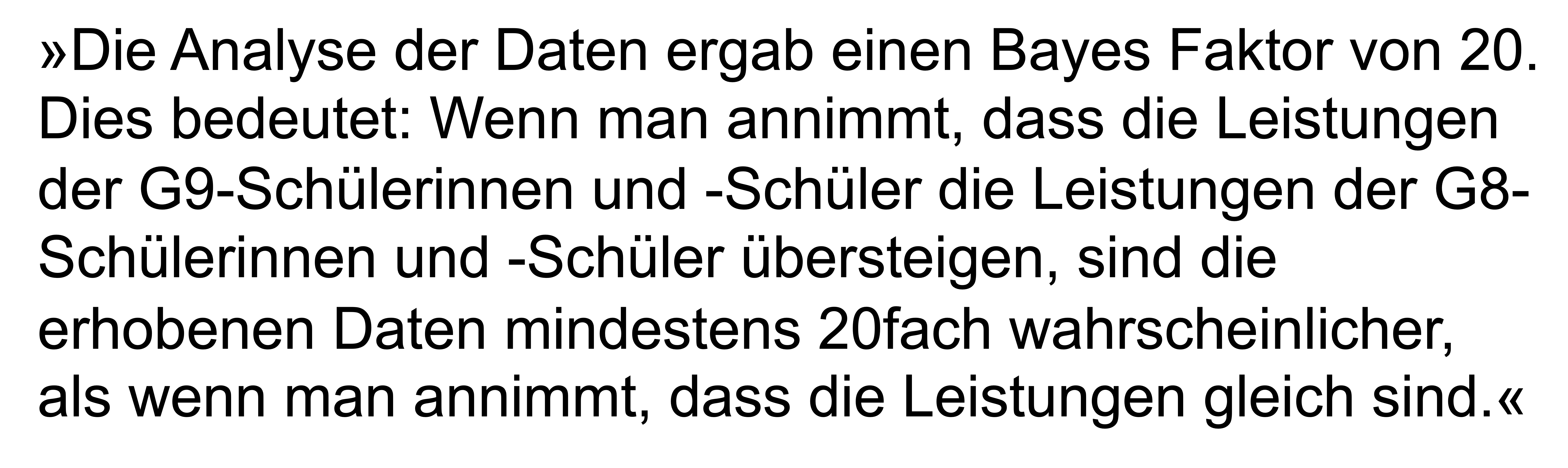
- “The Bayes Factor is 20, indicating that the data are at least than 20 times more likely under the assumption that men and women are different than under the assumption that they are equal” (Hanel & Mehler, 2019, p. 471)
- …
- Visualisierung
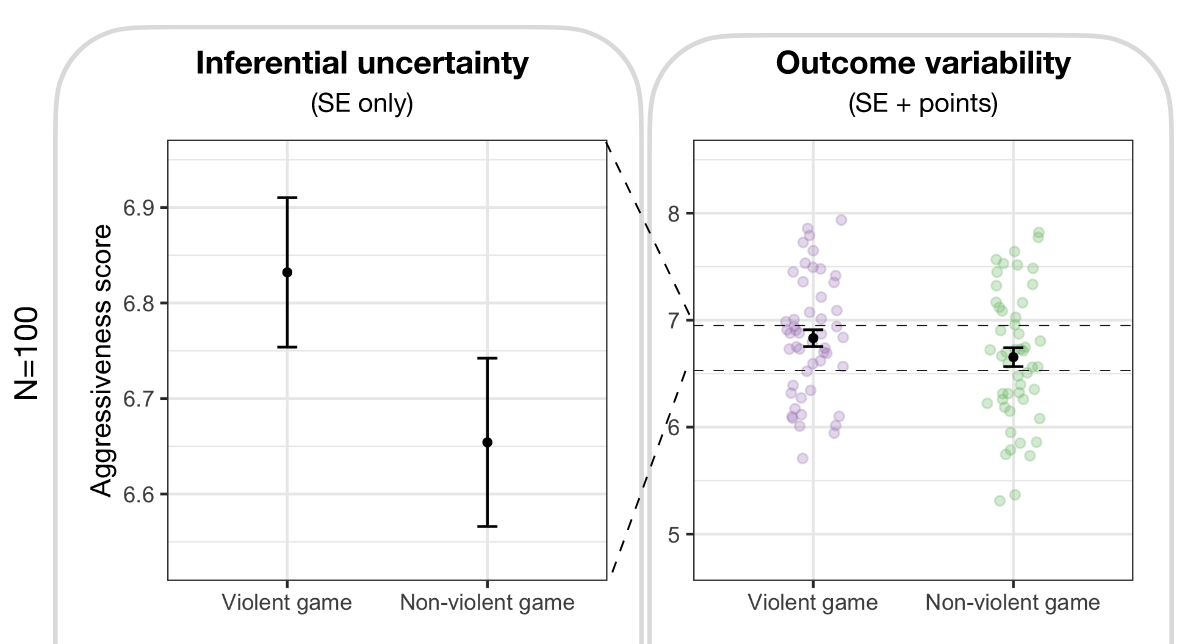
![Zhang et al. (2023)]()
Zhang et al. (2023) - …
Präsentationsmodus
- Text
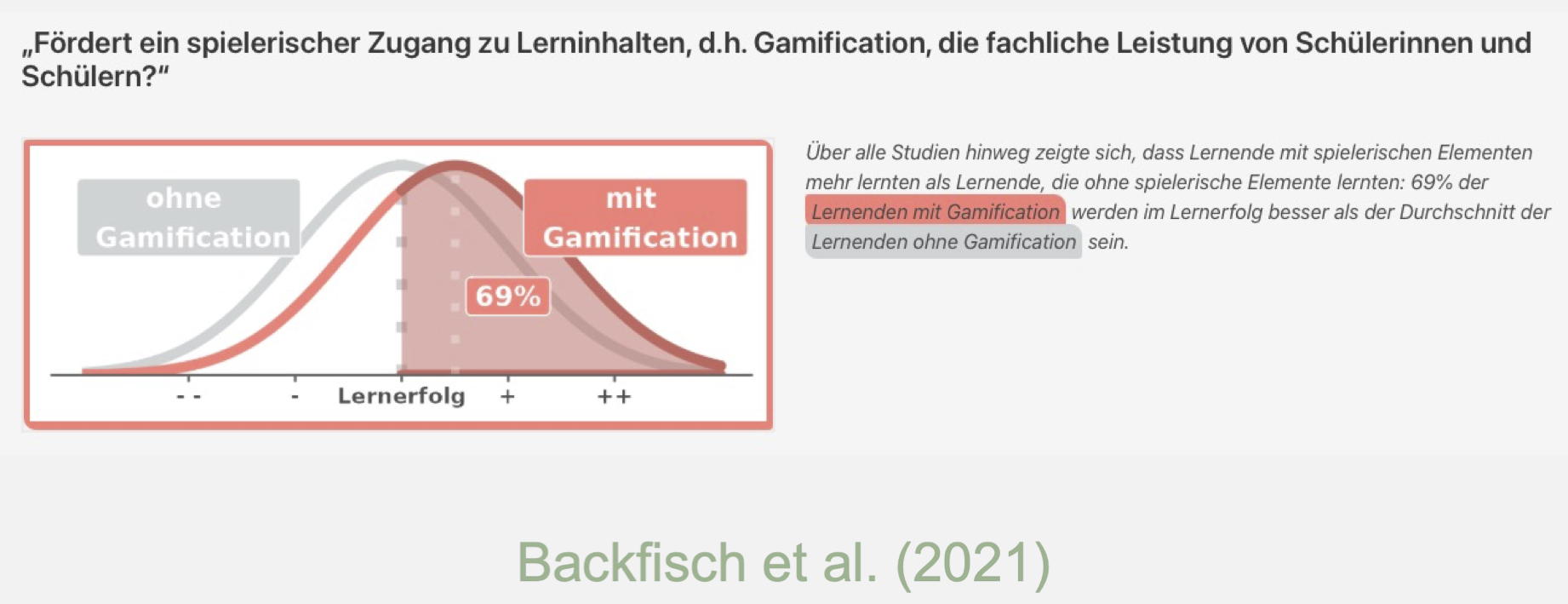
- Cohen’s U3:“…, dass 70% der SchülerInnen, die mit Lernmaterialien mit Hervorhebungen gearbeitet haben, Lerninhalte besser wiedergeben (…) als der Durchschnitt der Kontrollgruppe” (Wiesbeck et al., 2018, S. 5)
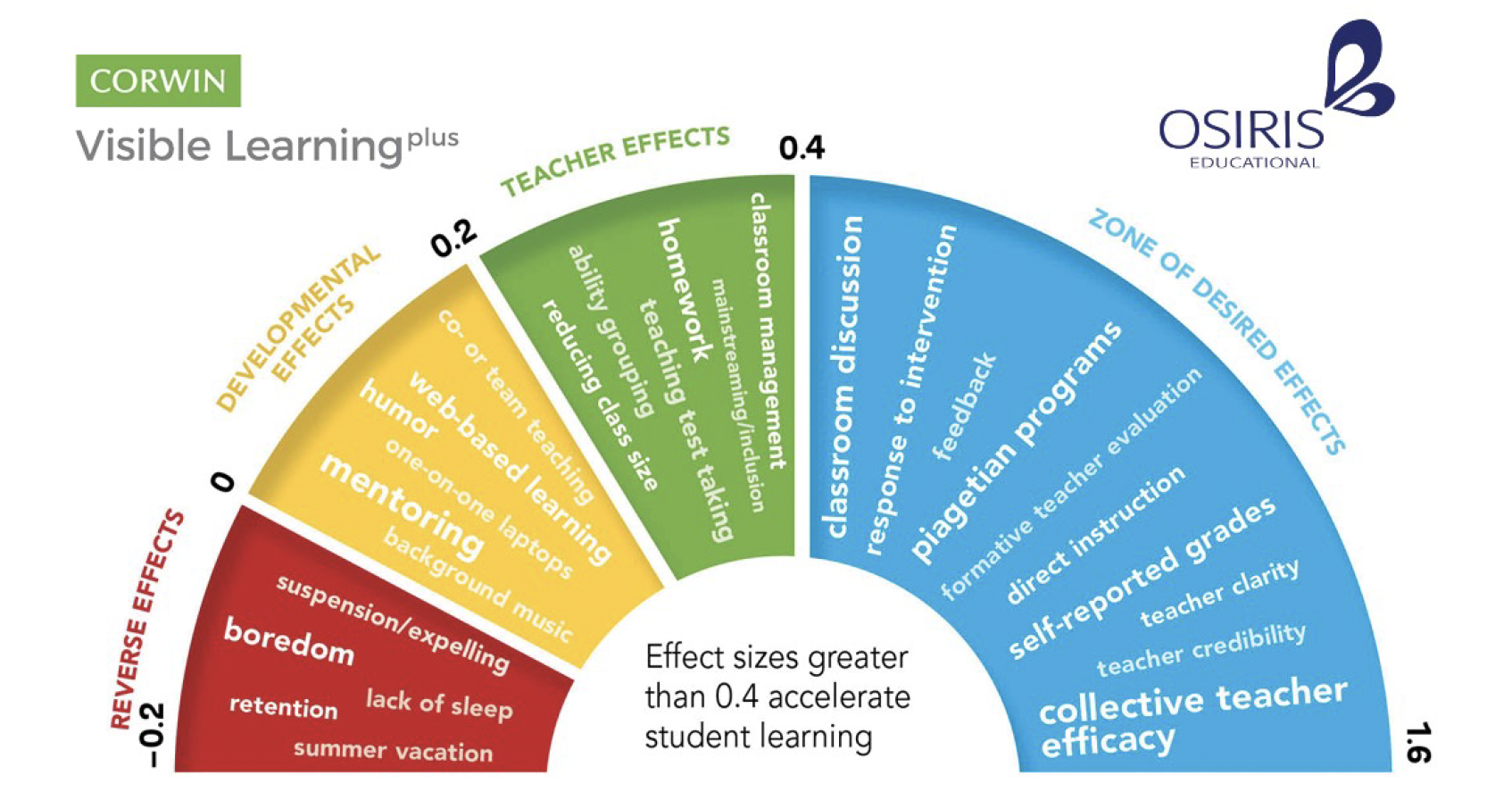
- Month of Progress: “The average impact of metacognition and self-regulation strategies (on learning) is an additional seven month’s progress over the course of a year” (Education Endowment Foundation, 2021)
- Größenanalogien: “It is also approximately the size of the difference in mean height between 15- and 16-year-old girls” (Cohen, 1988, p. 26)
- Visualisierung
![]()
![https://visible-learning.org/2022/01/hatties-barometer-of-influence-infographic/]()
https://visible-learning.org/2022/01/hatties-barometer-of-influence-infographic/ - …
Design
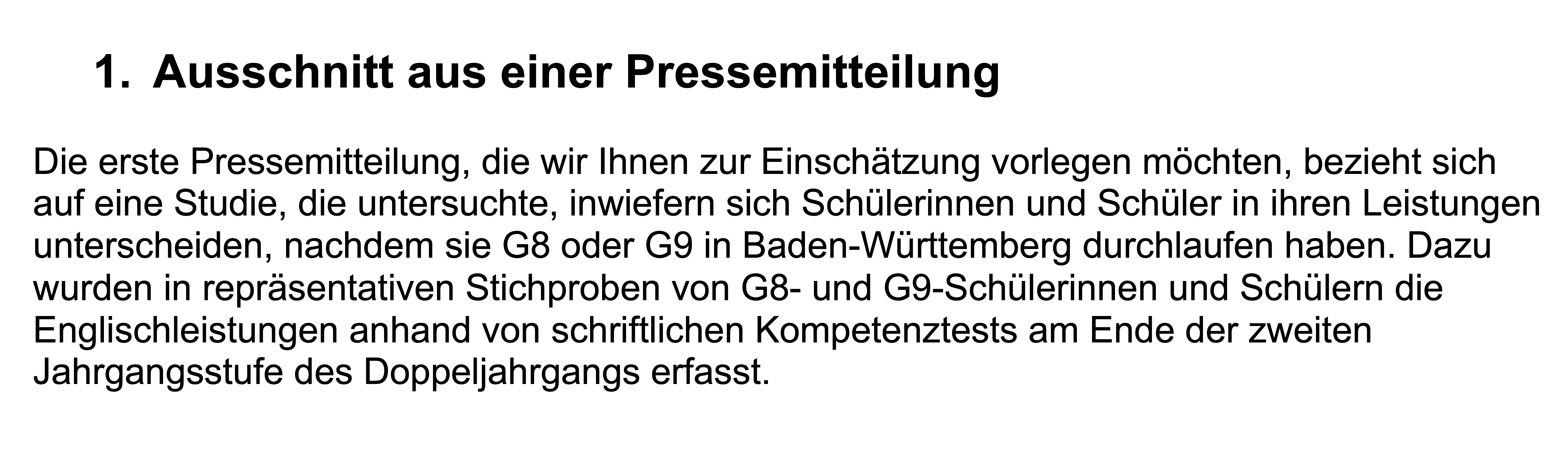
- N = 414 Lehrpersonen in Deutschland (repräsentative Stichprobe)
- Unvollständig rotiertes 5x6 Within-Within-Design
- Within-Faktor 1: Thema
G8
Motivationsförderung in Mathematik
Faktenboxen
PISA
Untertitel in Filmen
![]()
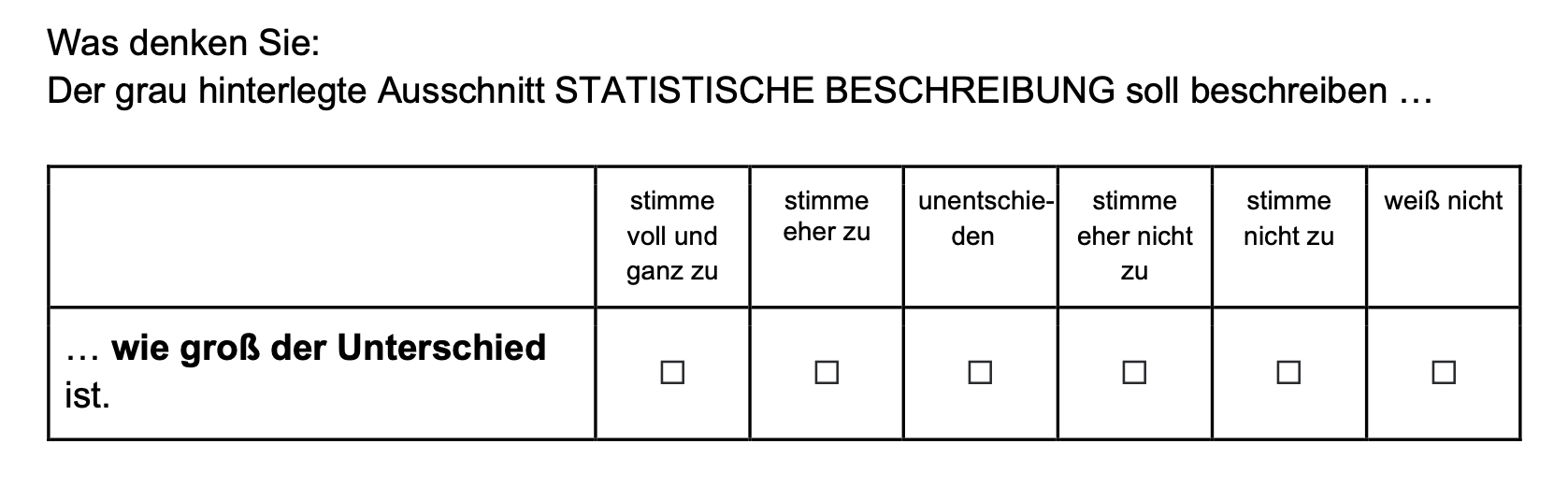
- Within-Faktor 2 & unabhängige Variable: statistische Beschreibung
- Standard Signifikanz-Aussage
- Definition des p-Wertes
- Beschreibung Bayes Faktor
- Beschreibung von Cohen’s d
- Beschreibung von Cohen’s U3
- Kombinierte Aussage aus Inferenzstatistik und Effektstärke
- Within-Faktor 1: Thema
 |
 |
 |
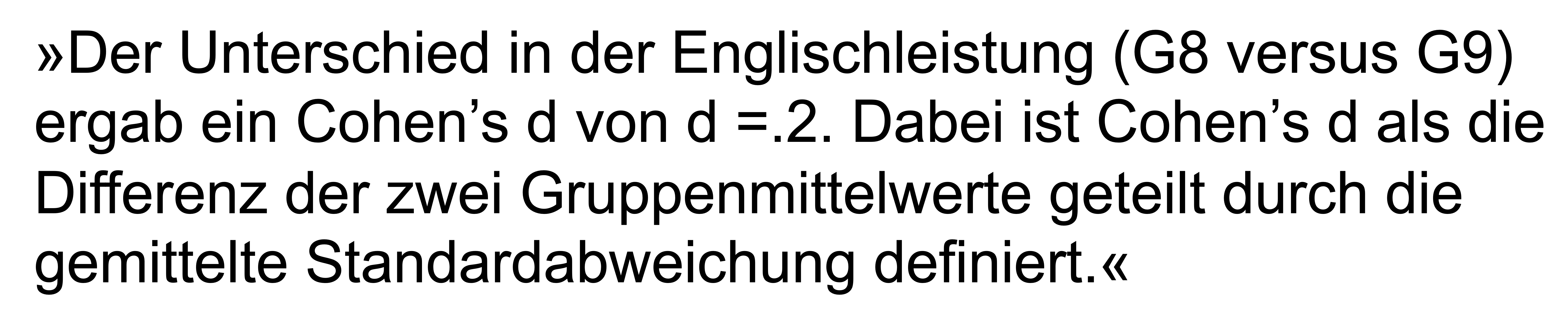 |
 |
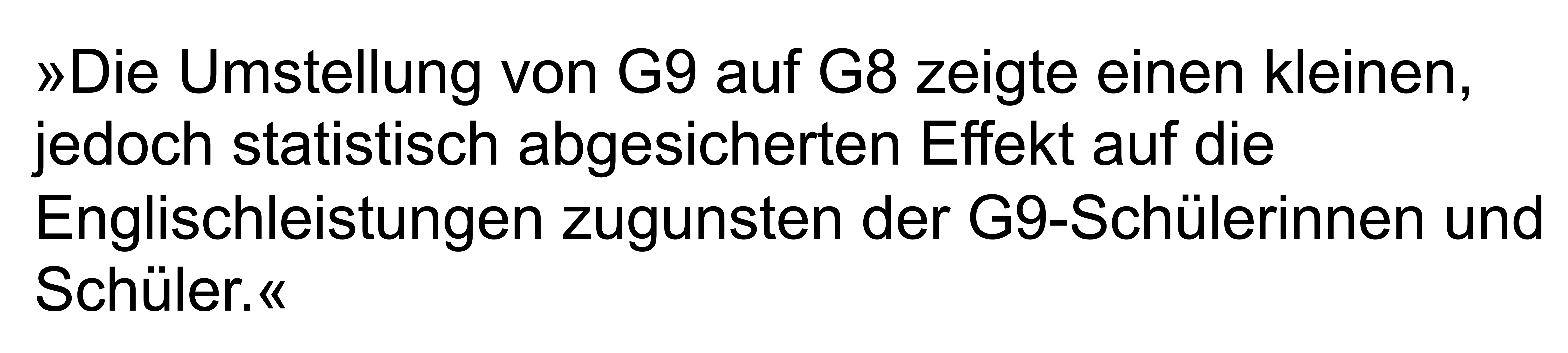 |
Abhängige Variablen
- Wahrgenommene Informativität
![]()
- Interpretation als Inferenstatistik
![]()
- Interpretation als Effektstärke
![]()
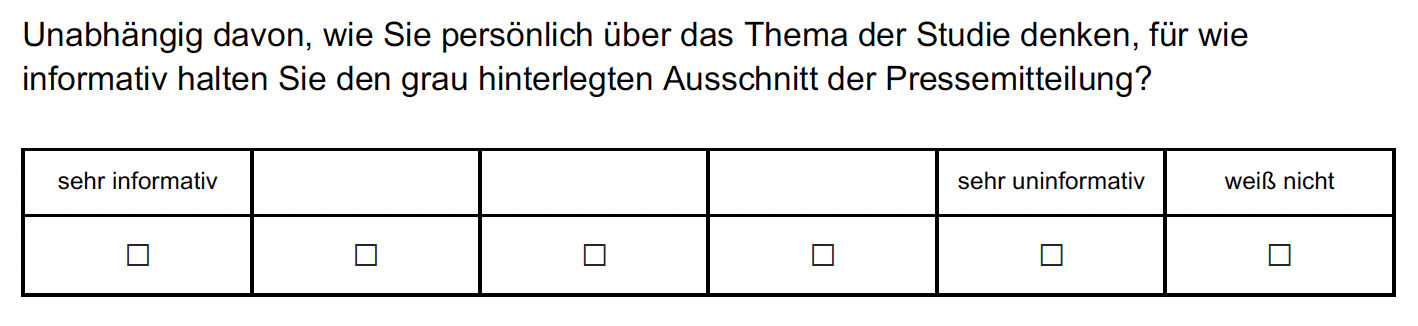
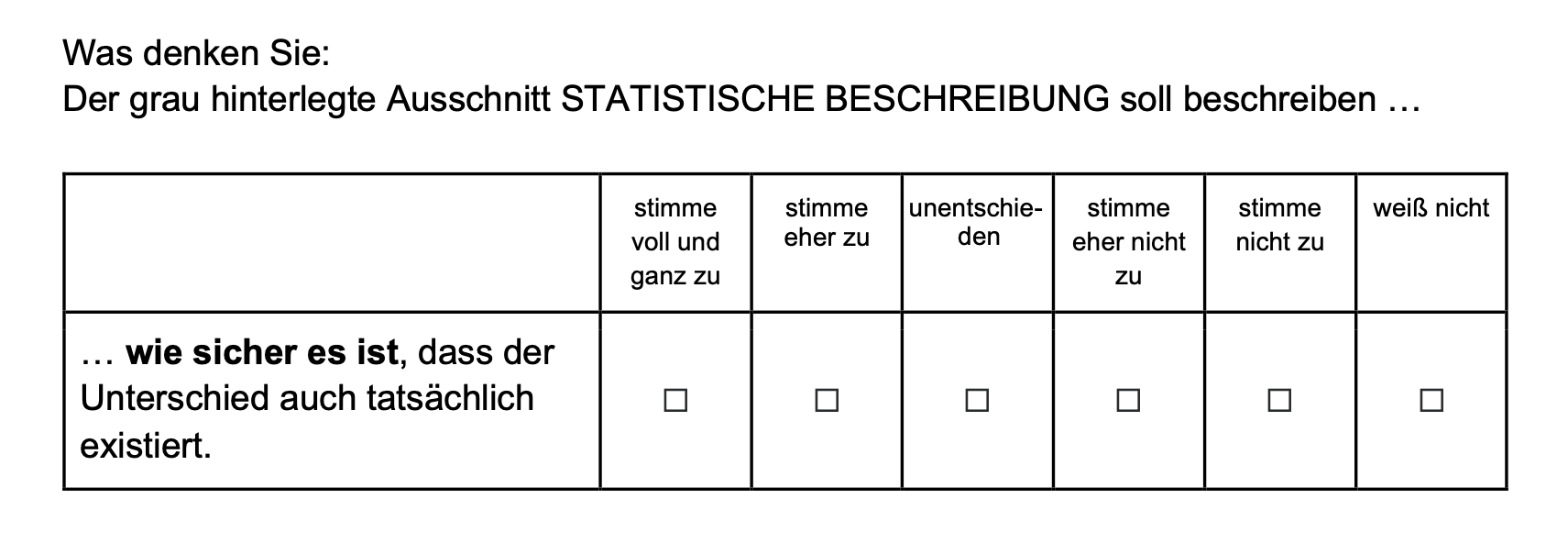
Ergebnisse
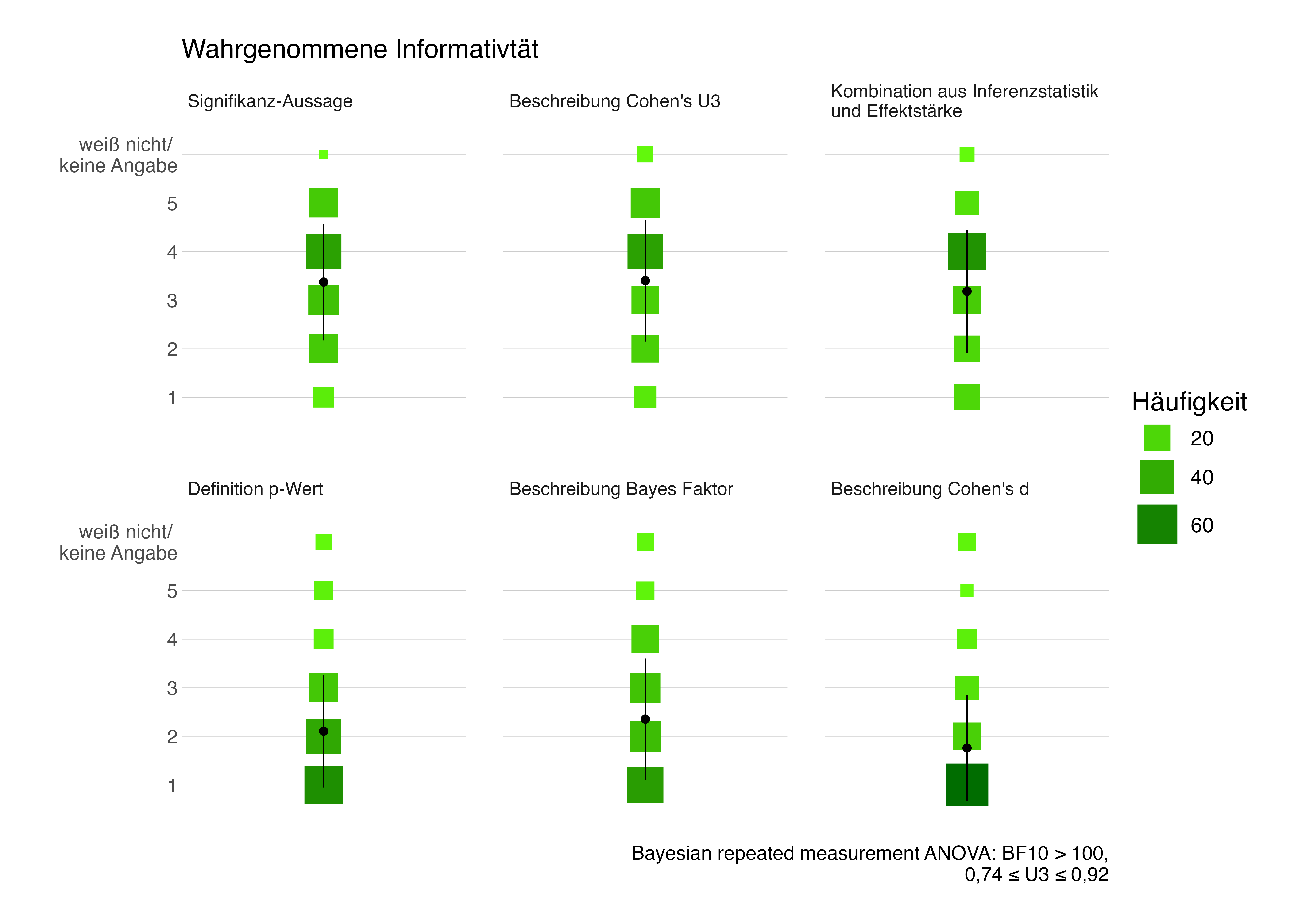
Forschungsfrage 1: Nehmen Lehrpersonen unterschiedliche statistische Beschreibungen in Pressemitteilungen unterschiedlich informativ wahr?
Lehrpersonen nehmen die Signifikanz-Aussage, Cohen’s U3 sowie die Kombination aus Inferenzstatistik und Effektstärke informativer wahr als die anderen statististischen Formulierungen.
Ergebnisse
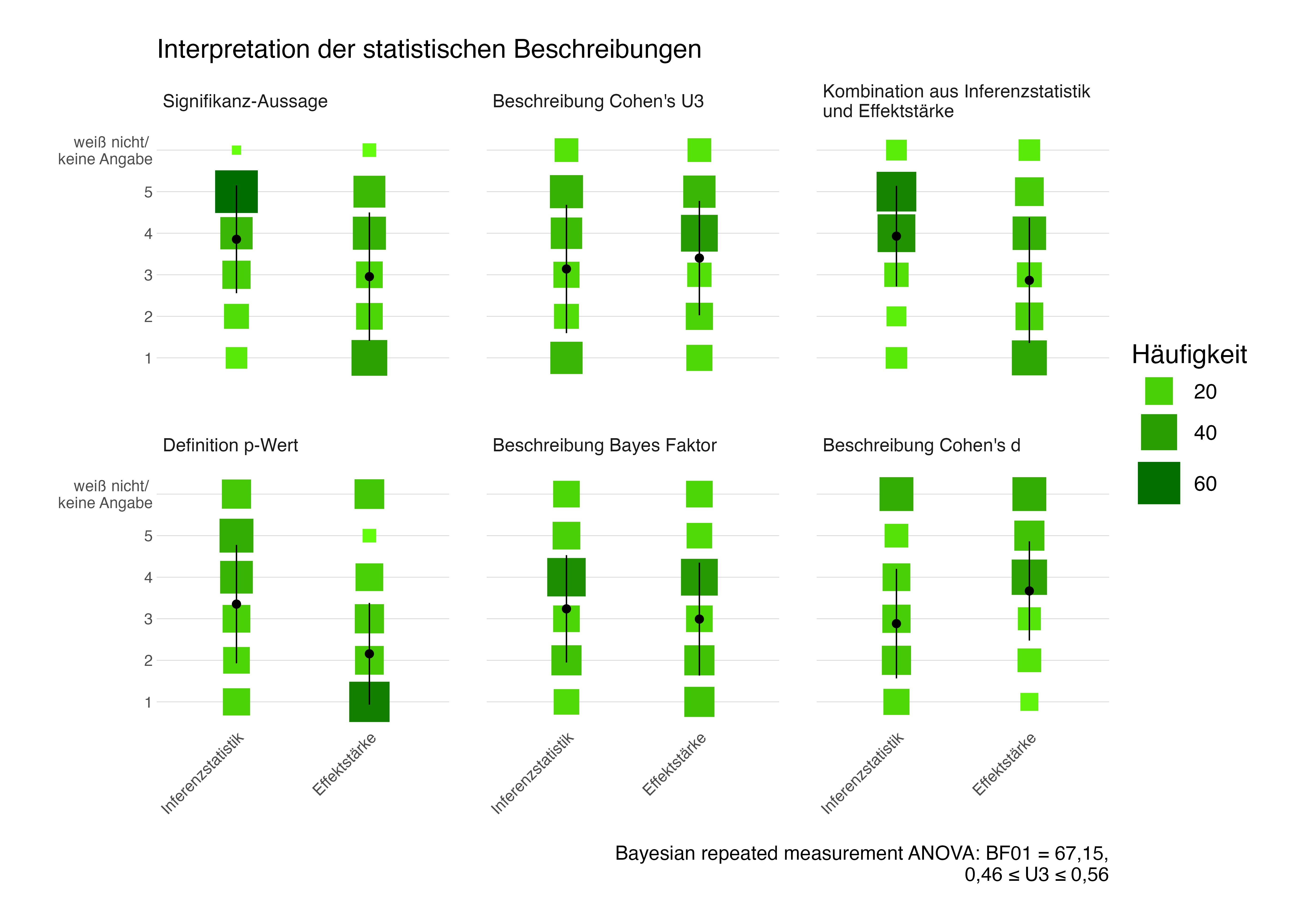
Forschungsfrage 2: Wie interpretieren Lehrpersonen verschiedene statistische Beschreibungen in Pressemitteilungen?
Lehrpersonen differenzieren nicht zwischen Inferenzstatistik und Effektstärke
Design
- N = 220 englischsprachige Lehrpersonen
4x10x2x4 Between-Within-Within-Between Design
Between-Faktor 1: Thema
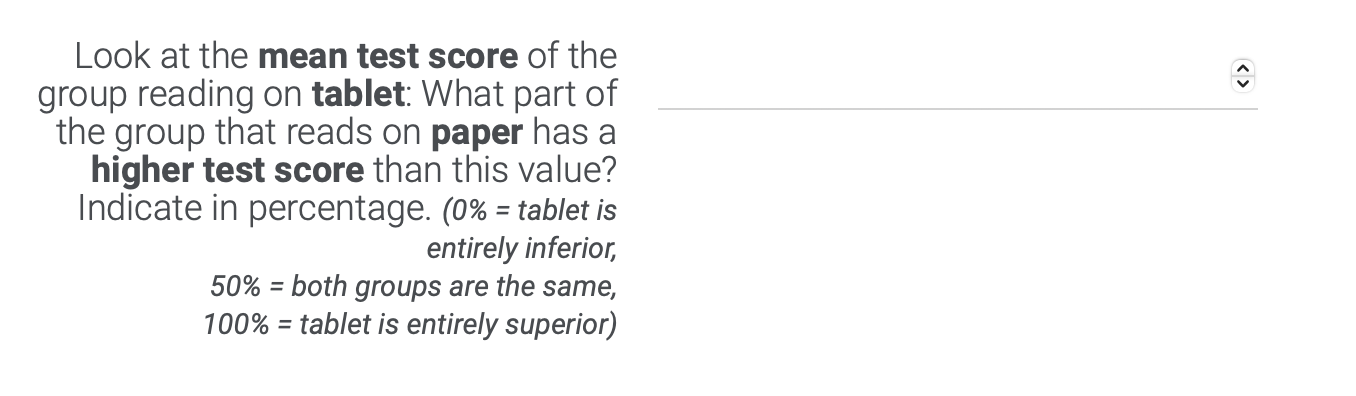
Lesen auf Papier vs. Tablet
Lernen anhand eines Live-Vortrags vs. Video
Lernen mittels Experimentieren vs. Computersimulation
Lernen mittels Erklärvideo mit Untertitel vs. Erklärvideo ohne Untertitel
![]()
Within-Faktor 2: präsentierte Effektstärke
d ∈ {−.80; −.65; −.50; −.35; −.20; .20; .35; .50; .65; .80}Within-Faktor 3: Visualisierungsart
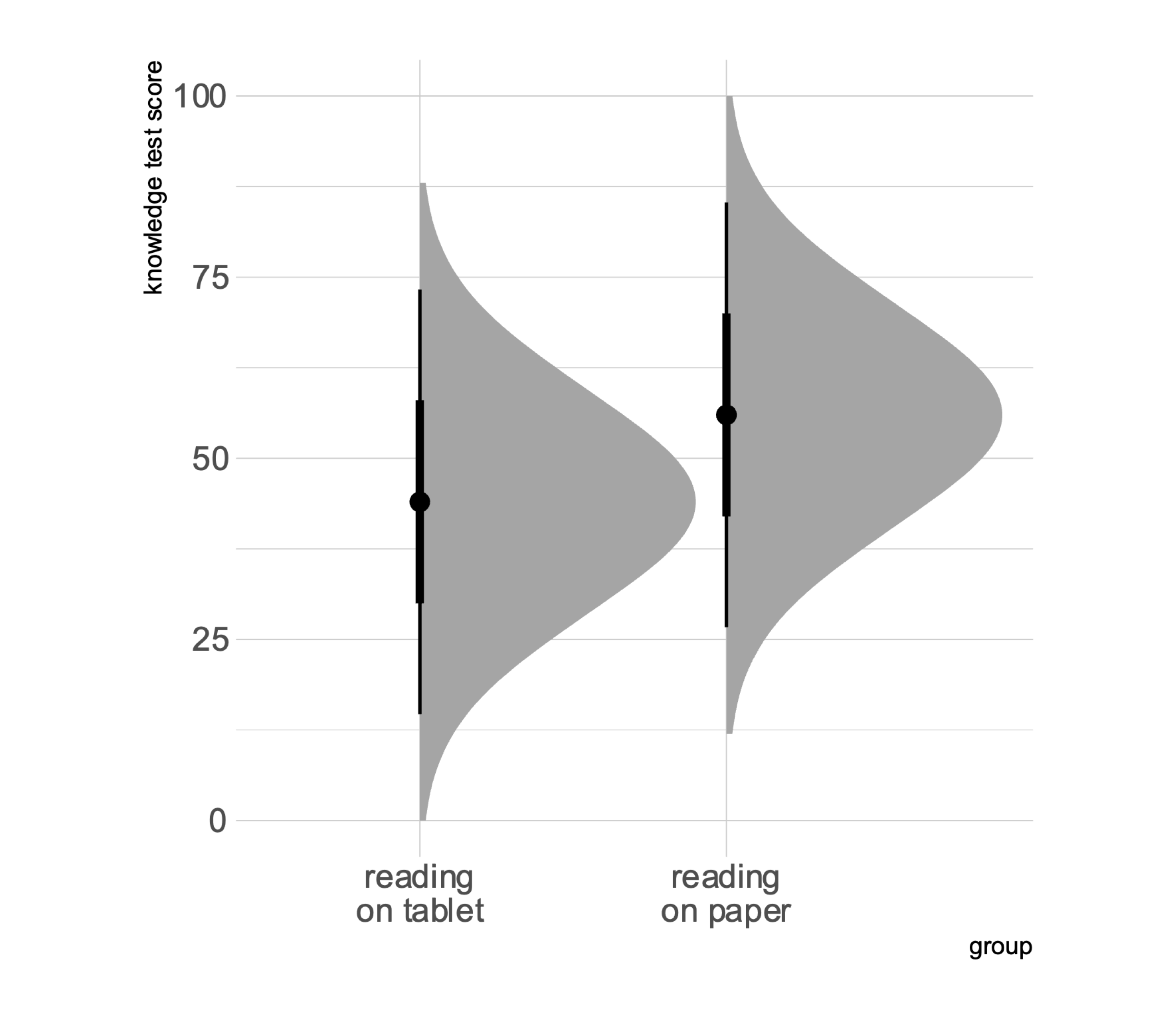
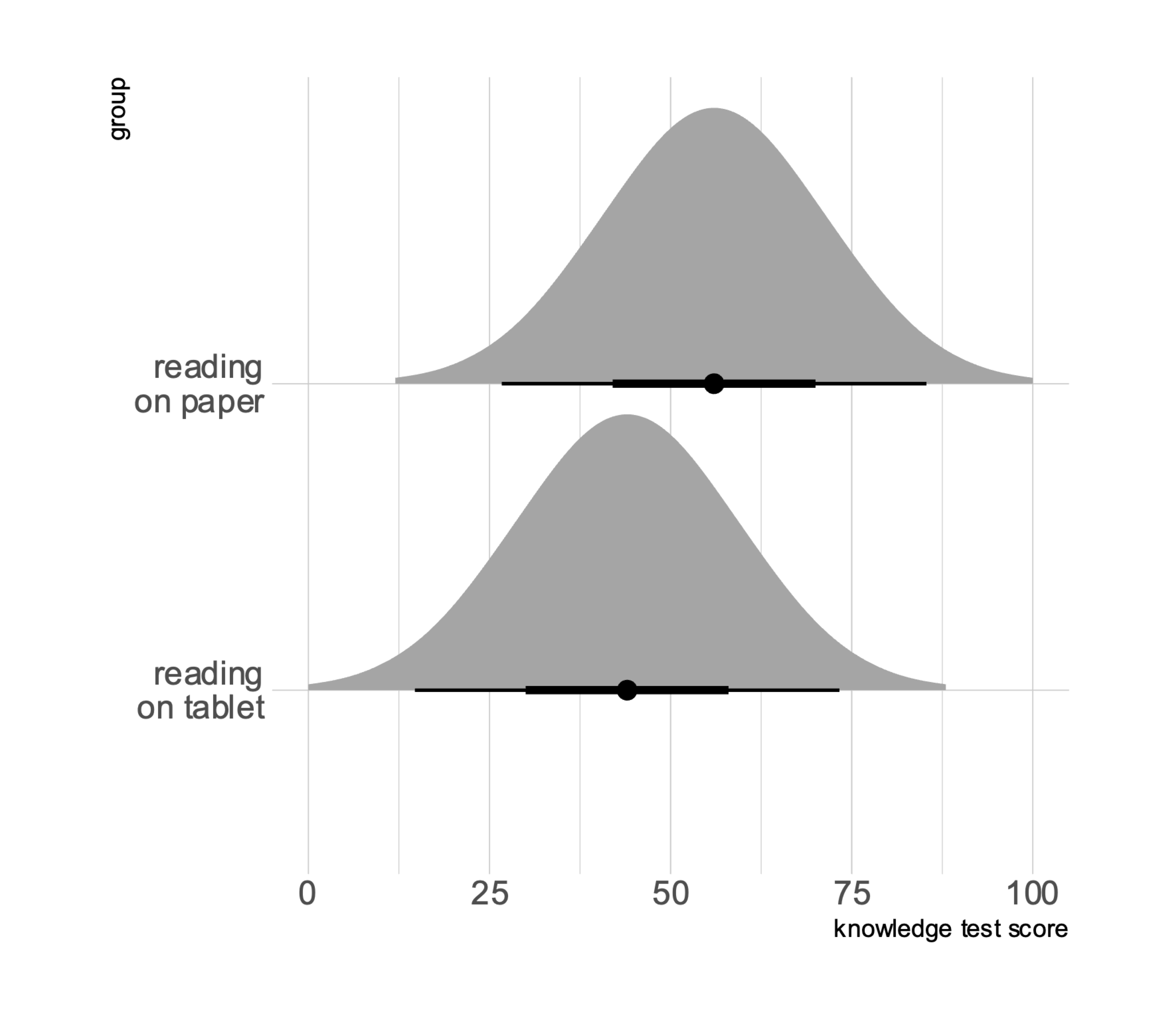
- Halfeye plot mit Gruppen auf der x-Achse
- Halfeye plot mit Gruppen auf der y-Achse

- Between-Faktor 4 & unabhängige Variable: Experimentalbedingung
- Kontrollgruppe
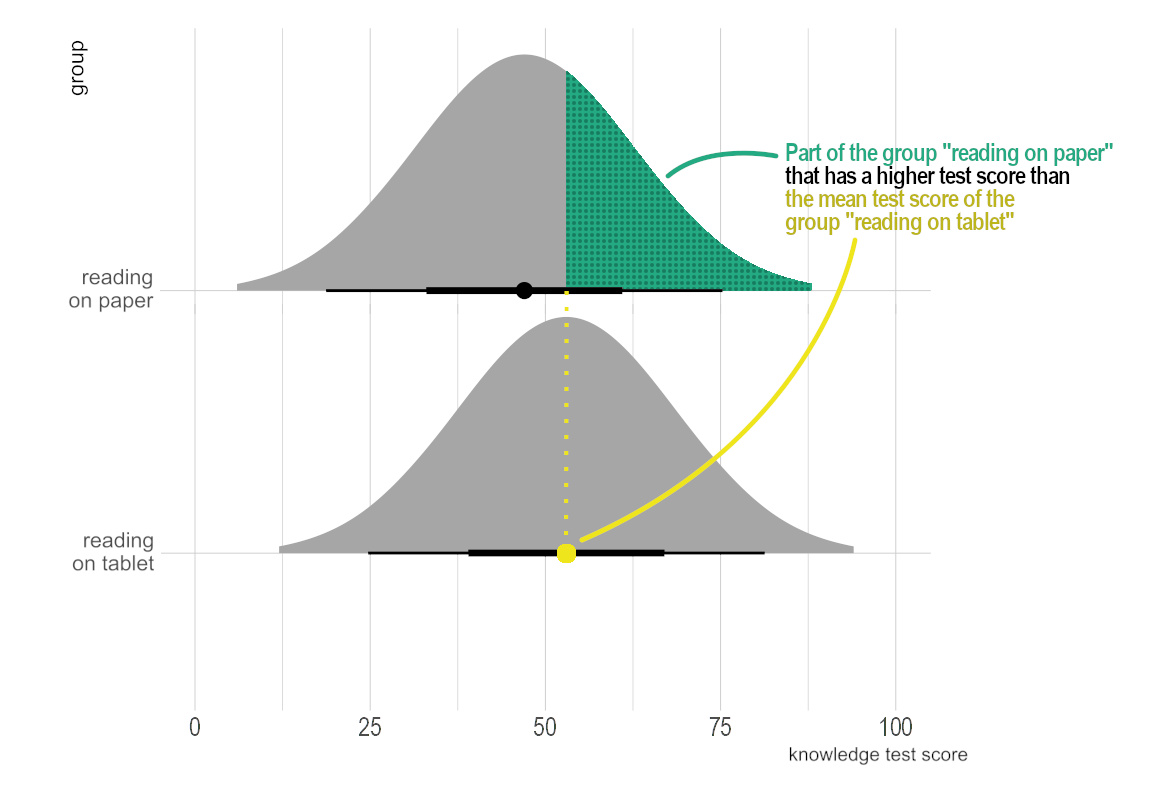
- Signaling Cohen’s U3
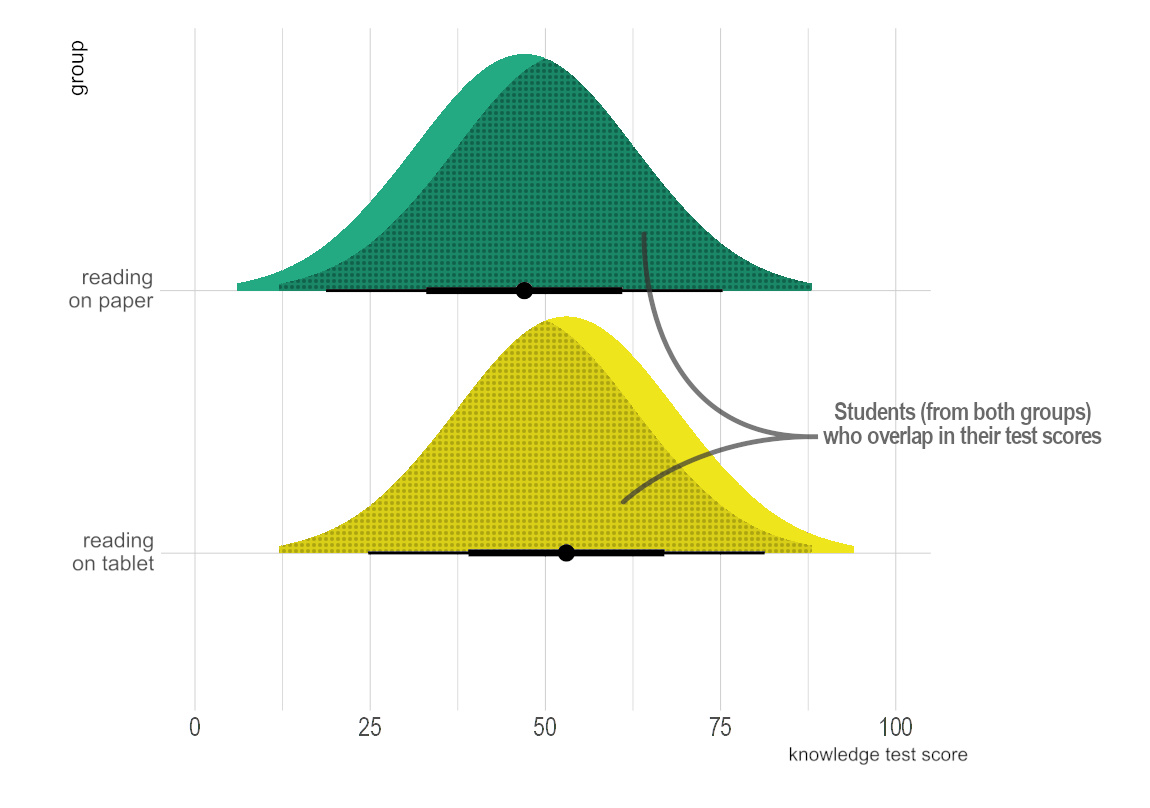
- Signaling Overlap
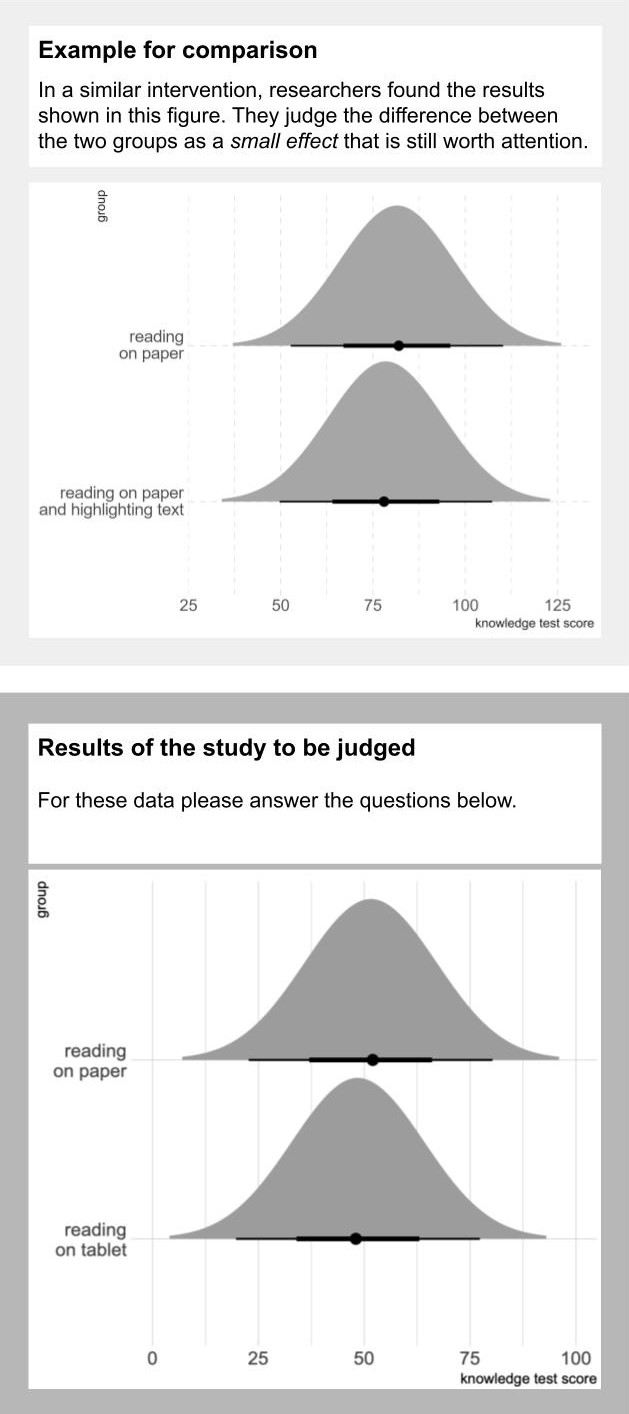
- Benchmark
Abhängige Variablen
- Wahrgenommene Informativität

- Akkuratheit
- Abstrakte Metrik
![]()
- Cohen’s U3 Metrik
![]()
- Abstrakte Metrik
- Cohen’s U3 Fehlkonzept: Median der U3 Ratings einer Person < 21,2% (kleinster plausibler Wert, der d = −.8 entspricht)

Ergebnisse
Forschungsfrage 2: Inwieweit steigern Anreicherungen in Visualisierungen die Akkuratheit der Einschätzung?
| Akkuratheit | Fehlkonzept |
|---|---|
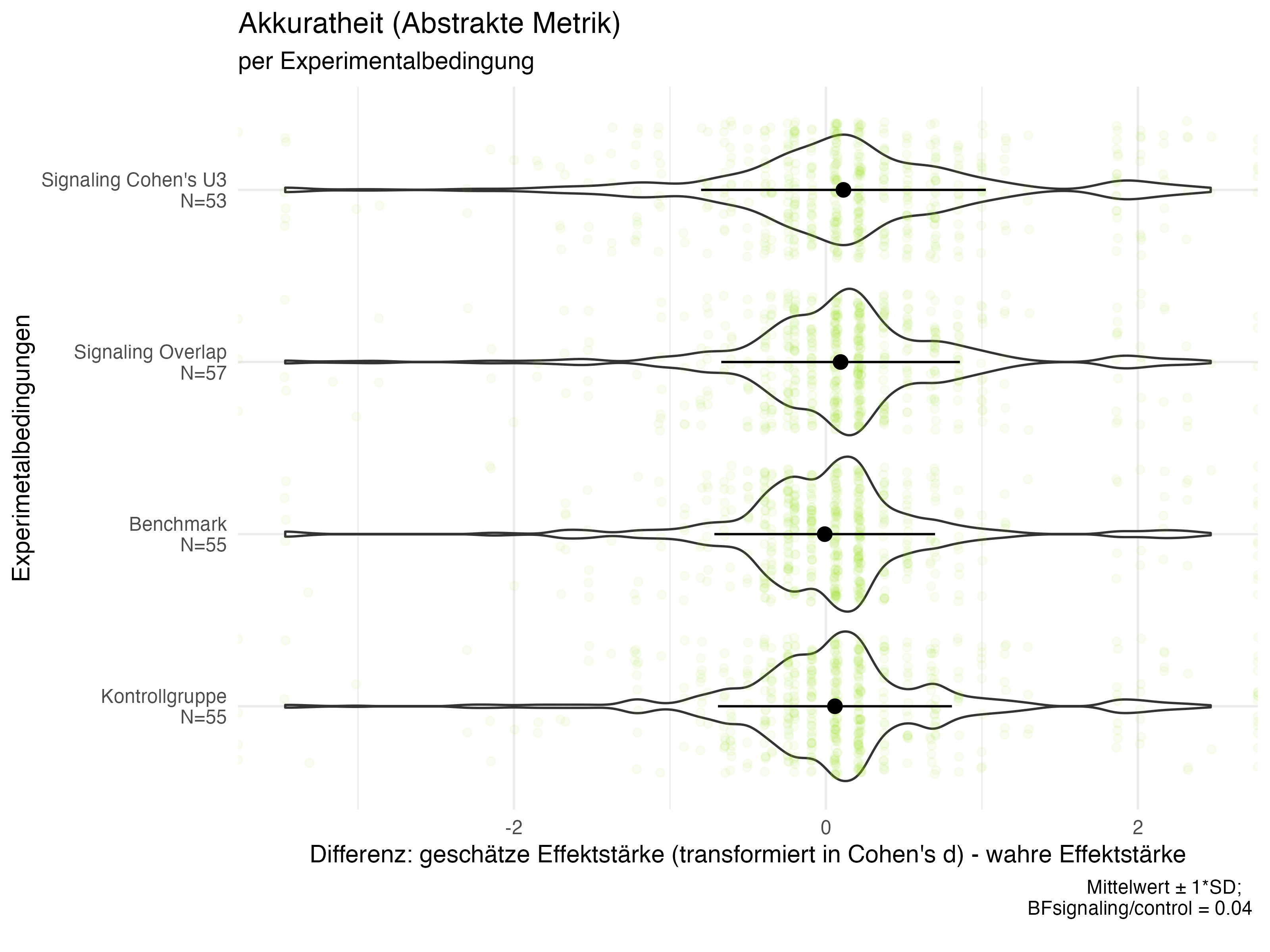 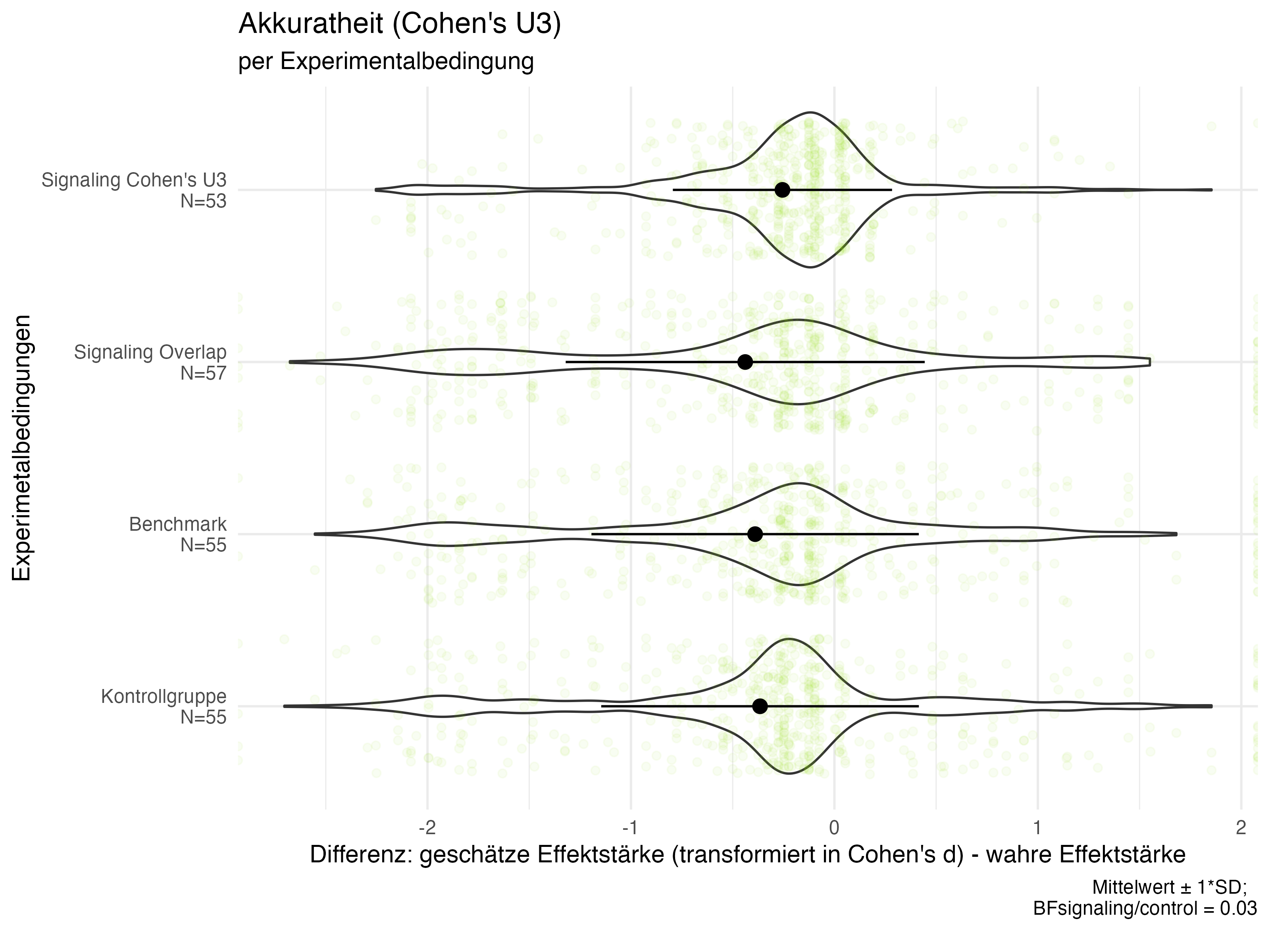 |
geringere Anzahl an Cohen’s U3-Fehlkonzepten bei Signaling U3-Bedingung 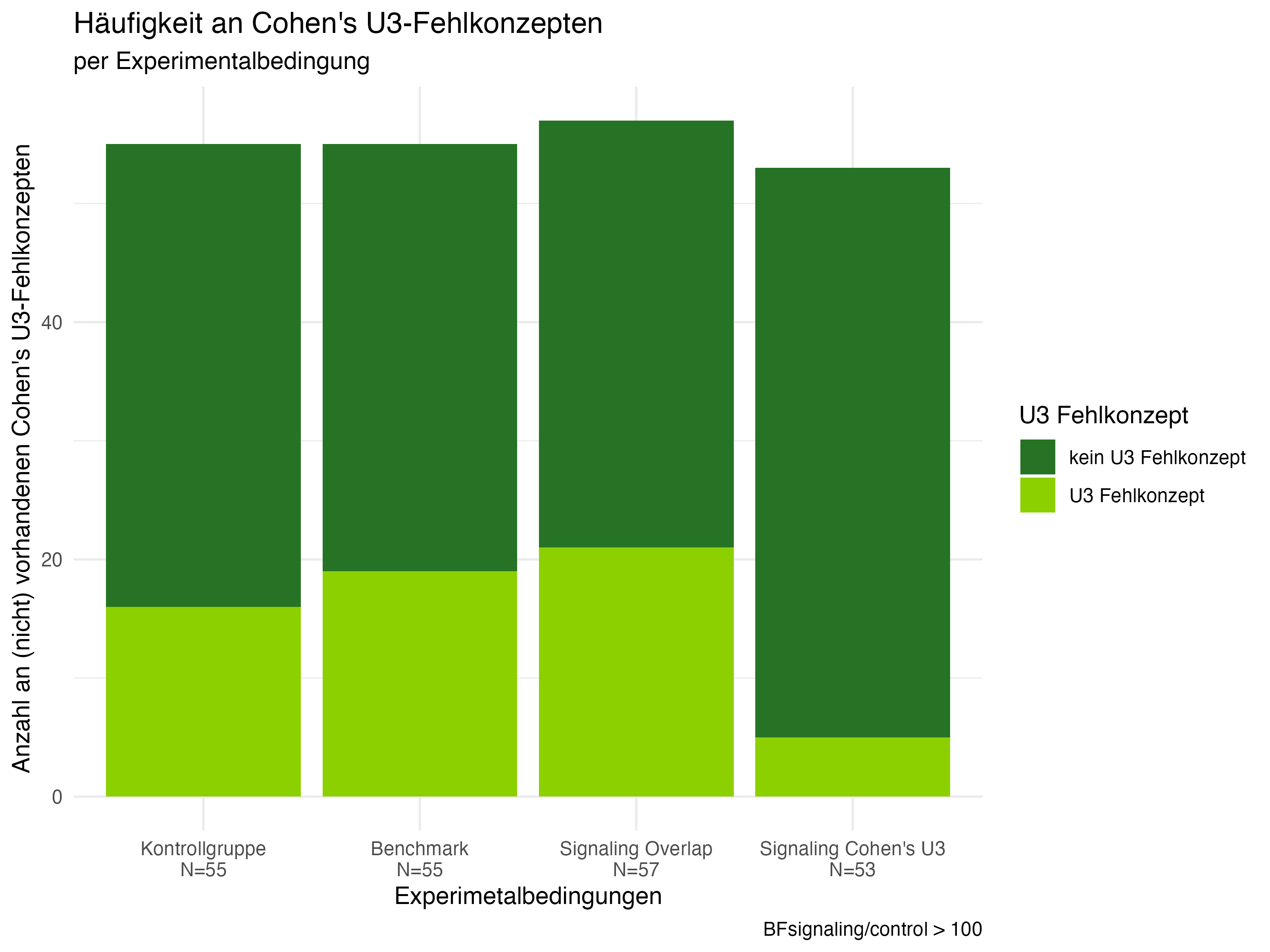 |
Design
- N = 20 englischsprachige Lehrpersonen aus UK und USA (Pilotstudie; rekrutiert via Prolific); Registered Report mit Bayesian Updating geplant
- 4x6x2 Between-Within-Within Design
- Between-Faktor 1: Thema
- KI-Tutor Leseflüssigkeit
- 3D-Videos/2D-Videos
- Activity Tracker
- Experimentierkits
![]()
- Within-Faktor 2: Effektstärke Cohen’s d \(\in\{-.8,-.5,-.2, .2, .5, .8\}\)
- Within-Faktor 3 & unabhängige Variable: Aufbereitungsmodi
- Text (Cohen’s U3 Formulierung)
- Visualisierung (Halfeye plot)
- Between-Faktor 1: Thema
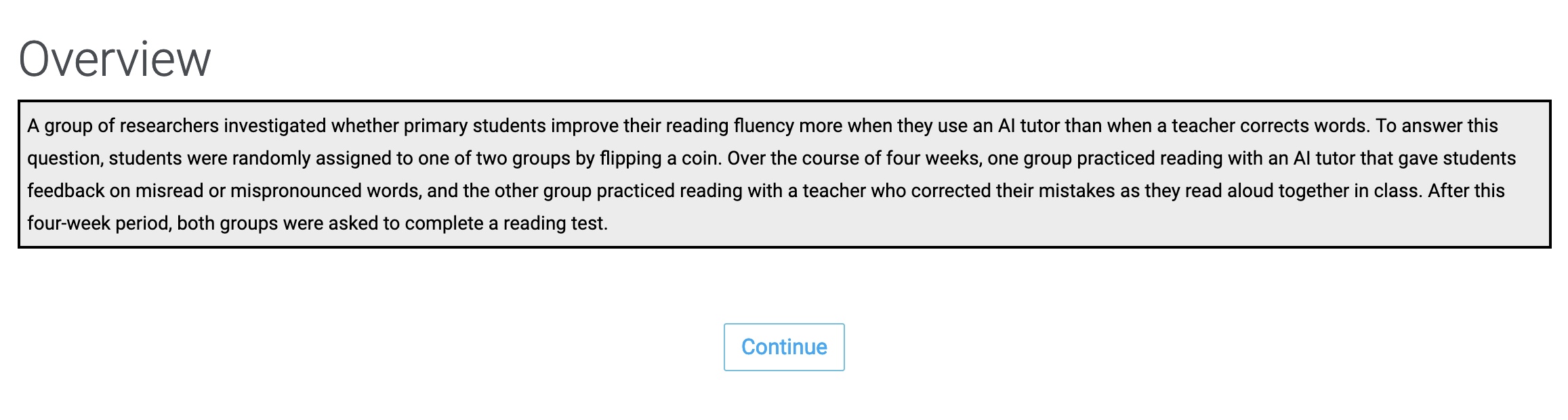
 |
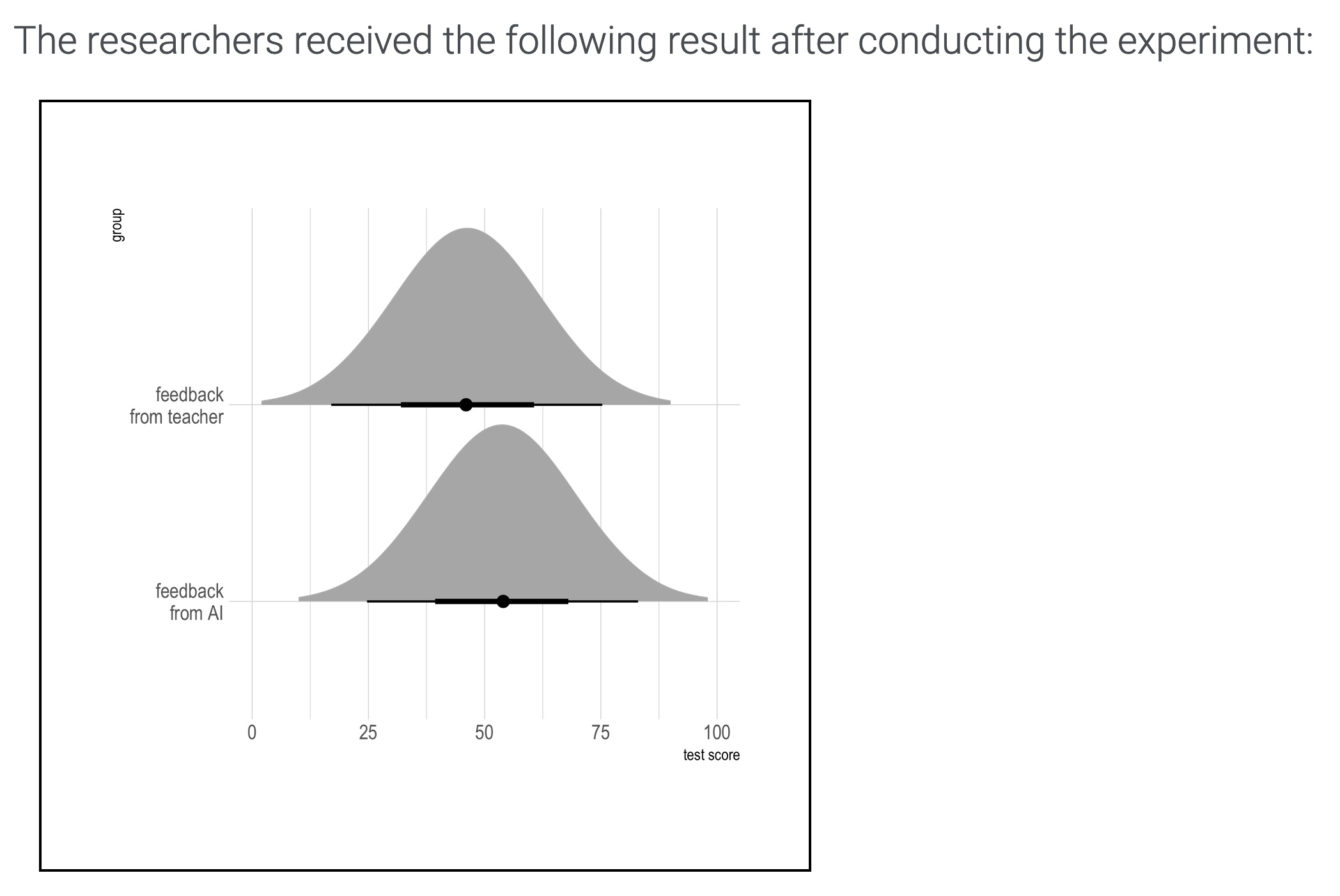 |
Abhängige Variablen
- Wahrgenommene Informativität (vgl. Schmidt et al., 2024)
 |
|
 |
- Wahrgenommene Effektstärke (Hullman et al., 2015; z.B. Kale et al., 2020)
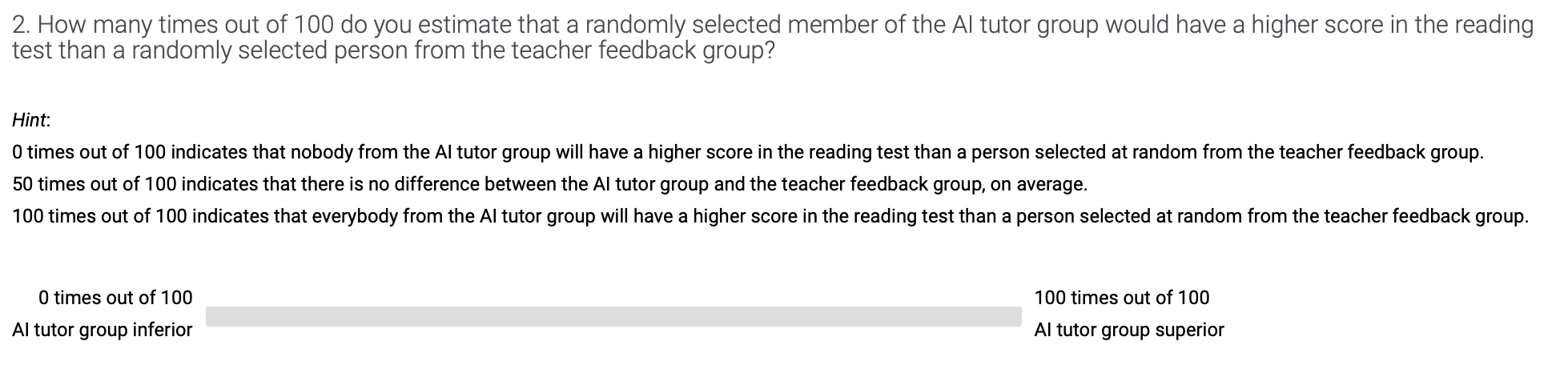
Ergebnisse
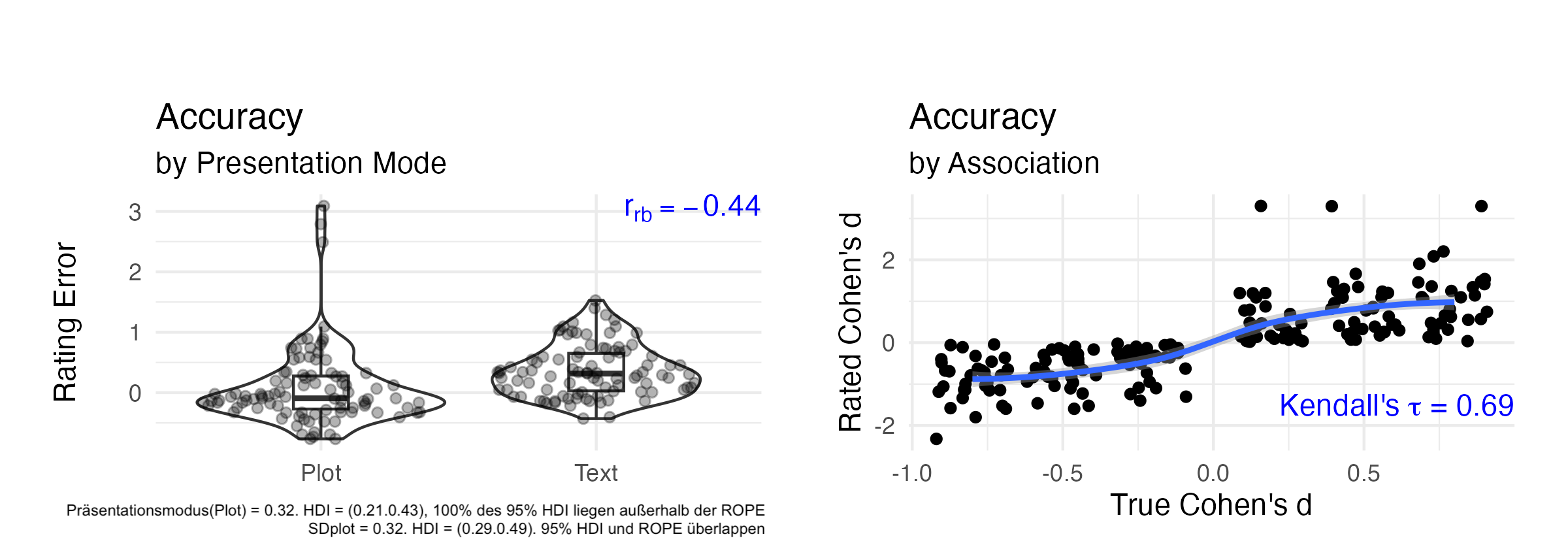
Forschungsfrage: Gibt es Unterschiede zwischen den textbasierten und visuellen Aufbereitungen von Effektstärken bezüglich der wahrgenommenen Informativität und der Akkuratheit?
Lehrpersonen nehmen textbasierte Aufbereitungen von Effektstärken informativer wahr, schätzen aber visuelle Aufbereitungen akkurater ein.
| Informativität | Akkuratheit |
|---|---|
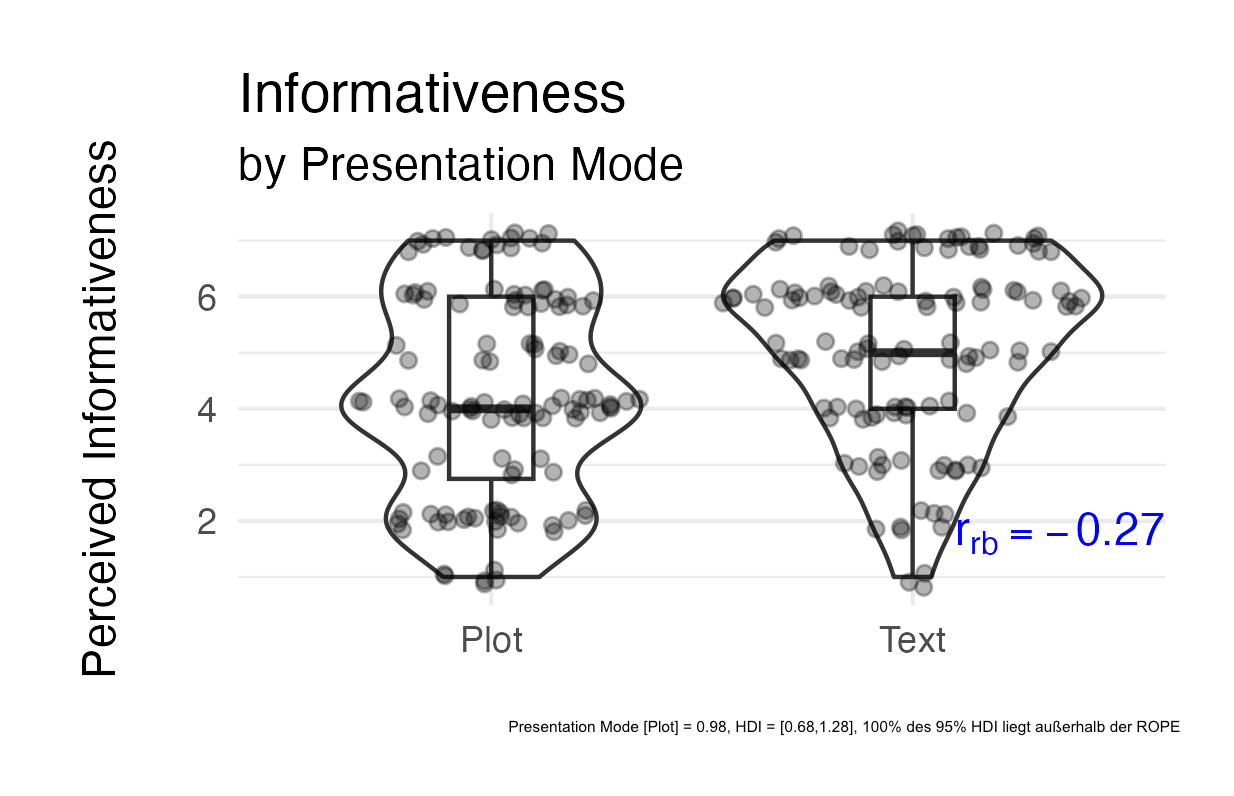 |
 |
Referenzen